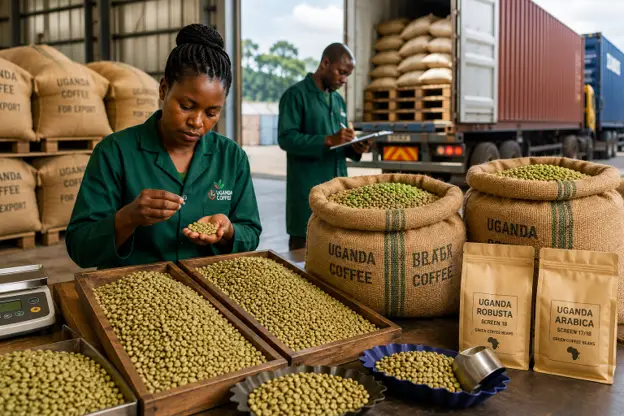











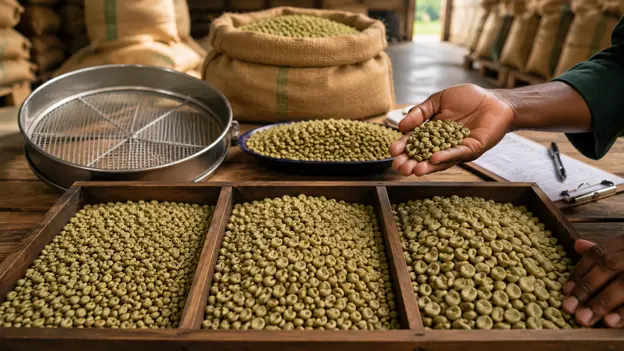
A quotation might read Uganda Robusta Screen 18, 90% retained, but that single line rarely tells an importer everything worth knowing. Lot uniformity, moisture, and cup performance still need to be checked before any order is confirmed.
Ugandan coffee bean screen grades give buyers a starting point for comparing offers side by side. The screen number points to bean size, but it works best when read together with moisture readings, defect counts, processing method, and how the coffee actually tastes in the cup.
What the Screen Number Actually Tells You
Green beans are sorted by passing them through metal screens with round holes of set diameters. The number attached to a screen refers to that hole size, which is the basis of bean size classification in the coffee trade.
A bigger number usually points to a larger bean, though this doesn’t guarantee every single bean in the bag matches that size exactly. Most export offers include a minimum retention figure that shows how much of the lot needs to sit on or above the stated screen.
Take this example:
- “Screen 18, 90% retained” tells you that at least 90% of the beans hit that size mark.
- Whatever’s left over can include smaller beans, as long as they stay within the tolerance both sides agreed on.
- Whatever sample you’re shown should genuinely reflect the coffee being shipped, not a cherry-picked batch.
- The agreed coffee screen size needs to be written into the contract itself, not just mentioned in emails.
Screen 12, 15 and 18 Aren’t Just “Low, Medium, High”
It’s tempting to rank these three grades like a quality ladder, but that’s not really how they work. Each one tends to suit a different product, price bracket, and roasting approach.
Screen 12
Smaller beans dominate this grade, which often makes it a fit for buyers chasing volume, sharper pricing, or commercial-grade blends rather than single-origin showcases.
Worth checking before you commit:
- Retention percentage on the offer sheet.
- Limits on black and broken beans.
- How evenly the batch roasts.
- Whether it actually works for your intended blend.
Screen 15
This one lands in the middle ground, and a lot of roasters land here too when they want a workable balance between size, cost, and steady availability.
Ask about:
- Moisture content and defect thresholds.
- Crop year and how the coffee was processed.
- Results from an actual sample roast, not just paperwork.
- Whether the supplier can repeat this consistently on future orders.
Screen 18
Bigger beans give this grade a more uniform look, which matters for products where presentation and tighter sizing carry weight with the end customer.
Questions worth raising:
- Does the price premium show up in the cup, or just the appearance?
- Is bean density consistent across the lot?
- What’s the actual retention percentage?
- Was the sample pulled from the real export lot, or a separate batch?
Bigger Beans Don’t Automatically Mean Better Coffee
A higher screen number can help beans roast more evenly, assuming the lot is properly sorted in the first place. But size on its own says nothing about how the coffee will taste.
Screen grading won’t tell you about:
- Cleanliness of the cup.
- Quality of processing.
- How many defects are hiding in the lot.
- Freshness.
- Whether it clears the bar for specialty status.
This is exactly why green coffee grading and specialty coffee grading look at far more than bean size alone. Cupping scores, defect counts, moisture, density, region, and processing method all factor into a real quality picture.
Don’t Compare Prices Until You’ve Compared the Full Spec
A cheaper quote can turn expensive fast if it leads to sorting losses or an uneven roast down the line. The smart move is comparing full specifications between offers, not just the screen number sitting at the top of the page.
Before signing off, ask your supplier for:
- Minimum screen retention.
- Moisture percentage.
- Defect and foreign matter limits.
- Crop year and processing method.
- Growing region and cup profile.
- Bag weight and packing details.
- Terms for sample approval.
- Inspection documents.
These details tell you whether an offer genuinely meets recognized export coffee standards, and they make comparing two quotations a lot more honest.
How Screen Size Plays Into Roasting
Beans that are close in size tend to absorb heat at a similar rate, which helps roasters get a more even result batch after batch. Throw a mixed-size lot into the roaster, though, and the smaller beans can finish well before the larger ones catch up.
That said, screen size is only one variable in how coffee behaves under heat. Moisture, density, variety, and processing method all shift the outcome too. Solid Uganda coffee grading should guide you toward sample testing, not act as a substitute for it.
Before You Approve Any Shipment
A few things worth doing before a lot gets the green light:
- Ask for a sample that genuinely represents the lot.
- Match it against the written specification.
- Cup it with your actual end product in mind.
- Double-check retention, moisture, and defect numbers.
- Settle on inspection procedures upfront.
- Agree in writing on what happens if the coffee doesn’t meet spec.
Választás a(z) Ugandan coffee bean screen grades isn’t about grabbing the largest bean available. It’s about finding the grade that actually fits your product, your price point, your roasting setup, and what your customers expect from the cup.
Cents Coffee supplies Ugandan Robusta across Screen 12, Screen 15, and Screen 18 grades. Importers are welcome to compare specifications, request samples, and pick the option that fits their business.
GYIK
1. What are Ugandan coffee bean screen grades?
Ugandan coffee bean screen grades classify green coffee beans according to their size using standardized grading screens. They help buyers evaluate bean uniformity before purchasing.
2. Does a higher screen grade always mean better coffee?
No. A larger screen size indicates bigger beans, but coffee quality also depends on factors like moisture content, defect count, processing method, density, and cup profile.
3. What is the difference between Screen 12, Screen 15, and Screen 18 coffee?
- Screen 12: Smaller beans suitable for commercial blends.
- Screen 15: Medium-sized beans offering a balance of quality and value.
- Screen 18: Larger, more uniform beans often preferred for premium coffee products.
4. Why is screen size important for coffee roasting?
Uniform bean sizes roast more evenly, helping achieve consistent flavor, aroma, and roast development across each batch.
5. What should importers check besides screen grade?
Importers should also verify moisture content, defect levels, processing method, crop year, cup profile, packing standards, and inspection reports before placing an order.