
From Farm to Export: Our Coffee Process

Every bag of Cents Coffee green beans follows the same journey — from a seedling in one of our nursery beds to a sealed export container leaving Mombasa. Below is that journey, step by step, exactly as it happens on the ground in Uganda's coffee-growing regions.

1. Seedling Nursery

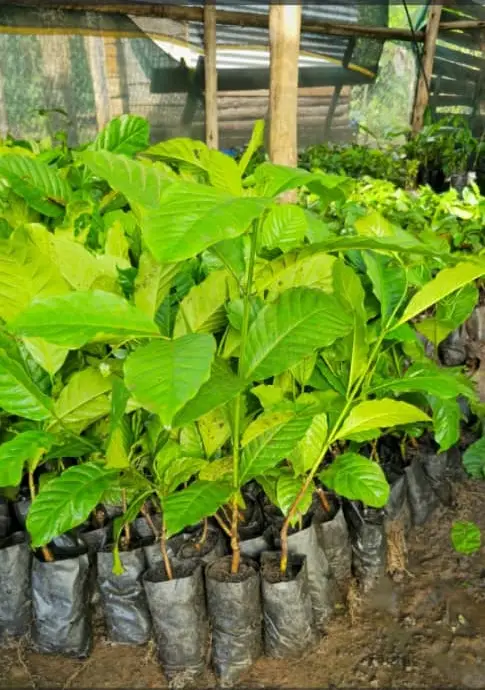
Our journey starts months before the first cherry ever ripens. Coffee seedlings are raised in shaded nursery beds under netting, given time to develop strong root systems before they’re transplanted onto farms across Uganda’s coffee-growing regions.

Coffee seedlings in one of our nursery beds, ready for transplanting.

2. Flowering & Cherry Ripening

Once planted, coffee trees are grown across Uganda’s diverse terroir — from the volcanic soils of Mount Elgon to the high-altitude Rwenzori “Mountains of the Moon.” Cherries ripen gradually and unevenly on the same branch, moving from green to yellow to deep red.

3. Selective Hand-Harvesting

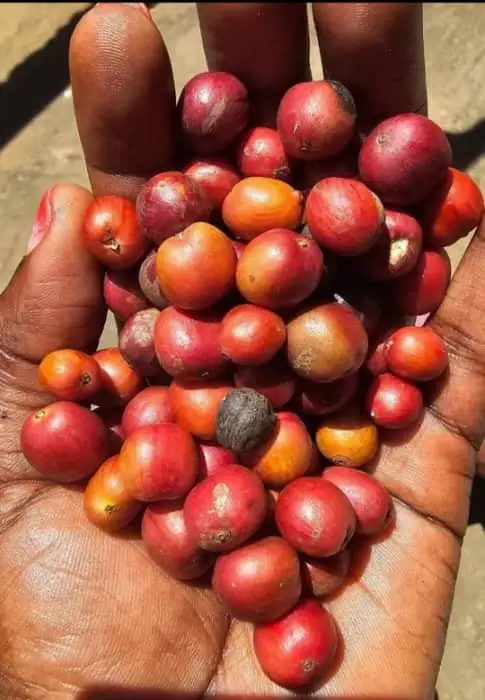
Because cherries on the same branch ripen at different times, our farming partners hand-pick only the fully ripe, deep-red cherries — the same way it has been done in Uganda for generations. This selective harvesting is one of the biggest quality differentiators between Cents Coffee and lower-grade, strip-picked coffee.

A hand-picked selection of ripe cherries, harvested at peak ripeness
Cherries drying on raised beds, turned regularly to dry evenly

4. Sun-Drying

After harvesting, cherries are spread across raised drying beds and turned regularly to dry evenly under the sun. This natural drying process — rather than fast mechanical drying — is what gives naturally processed Ugandan coffee (Drugar) its heavier, jammy, winey character.

“Processing Our Coffee” — mid-length clip showing on-the-ground processing; give it its own player rather than folding it into the drying photo block so it earns separate watch-time and its own VideoObject entry.

5. Hulling, Milling & Grading

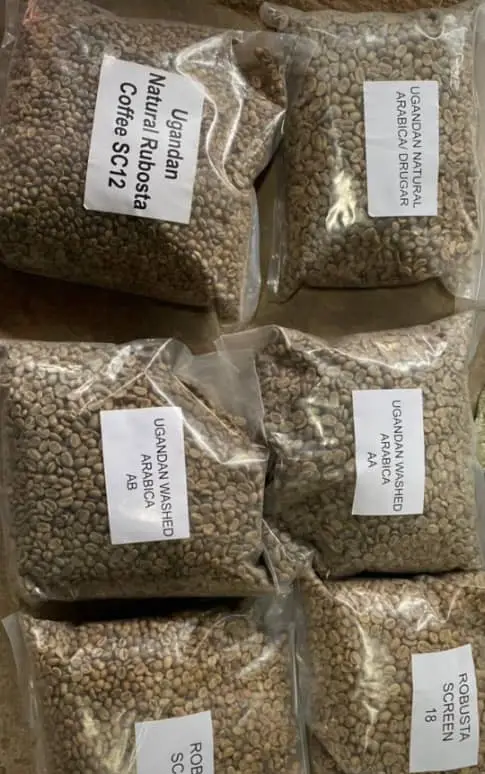
Once dried, cherries are hulled to remove the outer skin and parchment, revealing the green bean inside. Beans are then mechanically sorted and graded by screen size — Screen 12, 15, and 18 for Robusta, and AA/AB grading for Arabica — following the national grading standards approved under our MAAIF registration.

Weighing and sampling beans as part of our multi-stage QC process

6. Quality Sampling & Inspection

Before any lot is approved for bagging, it goes through our internal sampling process — and, on a periodic basis, an independent third-party surveyor cross-checks results across three separate samplings. Each lot is marked with QC and warehouse-location data so it can be traced back to the exact truck and production lot it came from.

7. Bagging & Warehousing

Graded beans are packed into 60kg jute bags labelled by grade and origin, then stored in our Kampala warehouse under controlled, dry conditions until they are allocated to an order. This is also where our traceability plan really pays off — every bag can be matched back to its production lot and warehouse location.

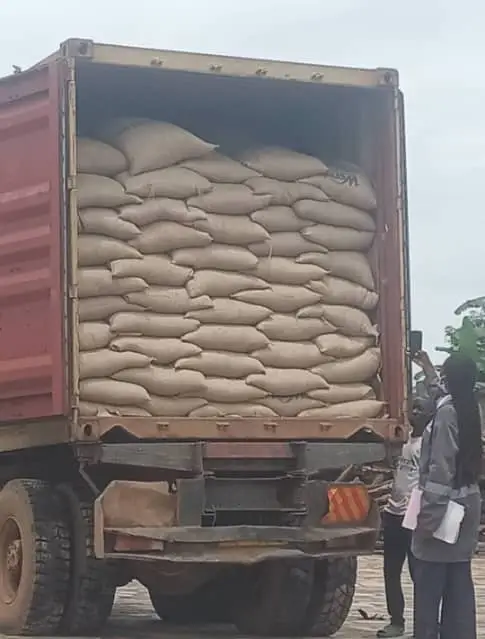
8. Container Loading & FOB Shipment

Once an order is confirmed, bags are loaded into export containers under staff supervision and transported to the agreed port — Mombasa, Entebbe, or Dar-es-Salaam — under FOB terms, exactly as authorised by our MAAIF export registration.

See it in Motion

“From Farm to Export — Full Process” — the longest, most complete clip, positioned as the closing summary video for the whole page. Best candidate to reuse (once) on the Quality page too, since it’s the most comprehensive of the three.

Întrebări frecvente

How is Ugandan coffee processed, from cherry to green bean?

Ripe cherries are hand-picked, then either sun-dried whole (natural/Drugar process) or washed and dried (washed process), before hulling removes the outer skin and parchment to reveal the green bean, which is then graded by screen size.

Washed coffee is depulped and fermented before drying, giving a cleaner, brighter cup. Natural/Drugar coffee is dried whole with the cherry intact, producing a heavier body with jammy, winey notes.

Timelines vary by lot and order volume, but the process typically spans harvesting, several weeks of drying and milling, multi-stage quality sampling, warehousing, and final container loading before FOB shipment.

Yes — every lot is tracked by truck, production lot, and warehouse location as part of our mandatory traceability plan. Contact us to request records for a specific order.