






A roastery’s reputation is built cup by cup — and every cup begins long before the drum starts turning. The condition of green coffee beans arriving at a roastery determines the ceiling of what any roast can achieve. European roasters understand this better than most, which is why the sourcing decision carries the same weight as the roast profile itself.
Why Bean Condition Defines the Roast Before It Begins
An unroasted bean carries everything the final cup will become — its acidity, its body, its aromatic potential. None of those qualities can be added during roasting. Heat develops what is already present, but it cannot create what is missing. Roasters supplying wholesale accounts and café chains across Europe face an additional pressure that makes this even more critical — their clients expect the same cup, every single week, without variation.
That level of repeat consistency is only possible when the green lot arriving at the roastery is graded, dried, and stored to a reliable standard. This is precisely why buyers involved in coffee import Europe have become more selective about the exporters they work with long-term.
What European Roasters Look for When Selecting a Green Lot
European speciality buyers often place strong emphasis on traceability, consistency, and shipment quality. Before committing to any purchase, experienced roasters check the following:
- Moisture content — beans that are too wet or too dry roast unevenly, breaking the batch consistency that wholesale clients depend on.
- Screen size and grade — uniform bean size means uniform heat absorption, which is the only way to maintain a stable roast profile across repeat orders.
- Processing method — washed, natural, and honey-processed lots each behave differently in the drum and must be declared accurately by the exporter.
- Shipment condition — EU roasters need assurance that what arrives matches the sample, with no moisture damage or grade mixing during transit.
- Traceability documentation — farm-level sourcing records are increasingly treated as a baseline requirement, not an optional extra.
How Roasting Transforms a Bean — And Why Starting Quality Cannot Be Fixed
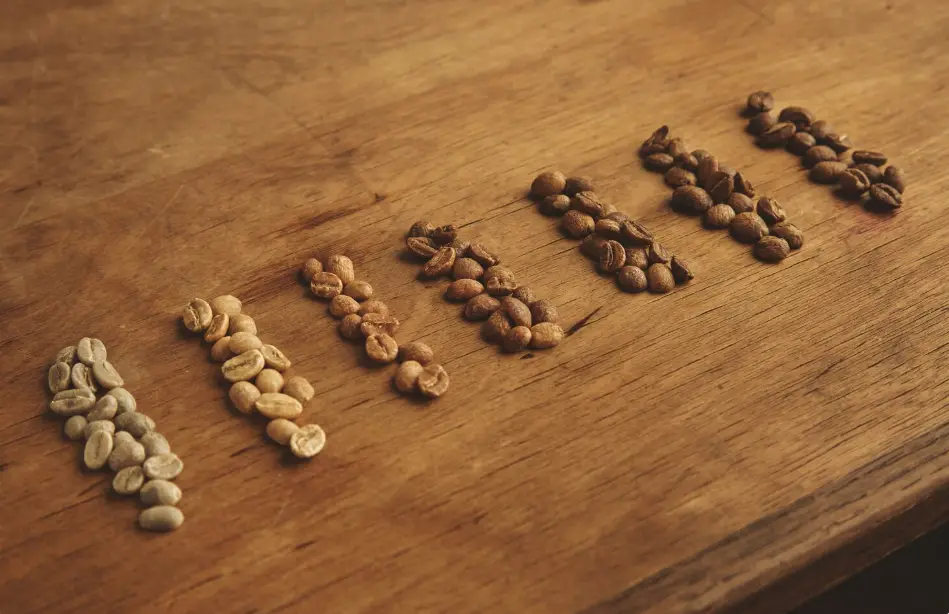
Vele roasting transformation is the moment a raw lot either delivers on its potential or exposes its weaknesses. Sugars caramelise, moisture escapes, acids develop or soften, and the cell structure opens to release the compounds that create aroma and flavour. What roasting cannot do is repair what arrived defective.
For roasters supplying consistent profiles to cafés and wholesale accounts across Europe, a single inconsistent batch creates complaints that take months to rebuild from. Green coffee beans that arrive at a verified, consistent grade give the roaster something reliable to work with — everything below that standard creates risk at the point of sale.
How to Compare Suppliers and Avoid Costly Sourcing Mistakes
For bulk purchasing decisions, the difference between a dependable exporter and a problematic one becomes clear only after the first large shipment arrives. Here is what to check before that point:
- Request a pre-shipment sample and cup it against the original — grading inconsistencies between the sample and delivery are the most common bulk sourcing problem.
- Without proper checks, bulk green coffee EU buyers risk receiving old crop presented as current-season stock.
- Ask directly whether the exporter can maintain the same grade and profile across three or more consecutive orders — one good shipment is not a reliable supply chain.
- Check import reliability — delayed or damaged shipments break roasting schedules and leave wholesale clients without stock.
Where Reliable Supply Begins
For European roasters supplying cafés, wholesalers, and retail accounts, sourcing is not a background decision — it is the backbone of everything produced under their name. Consistent grading, honest shipment quality, and traceable origin documentation are what the European specialty market now expects as standard. Cents Coffee supplies export-grade Ugandan green beans directly from farm level, with full traceability, consistent screen grading, and reliable shipment quality across repeat orders — built specifically for roasters who need a supply chain they can depend on batch after batch.
Často kladené otázky
What mistakes should I avoid when purchasing green coffee beans in bulk?
Skipping the pre-shipment sample stage and not confirming harvest dates are the two most costly errors — both produce inconsistent roasting results across large orders.
How can poor-quality green coffee beans affect my final coffee taste?
Defective or unevenly dried beans produce flat, harsh, or unpredictable cups — problems no roast adjustment can fully correct once the damage is done at origin.
How do I compare different suppliers of green coffee beans in Europe?
Cup samples from each under identical conditions and ask specifically whether grading remains consistent between the sample and the full shipment.
What affects the price of green coffee beans the most?
Growing altitude, processing method, screen grade, and harvest season drive pricing — with direct-trade and traceable lots commanding a premium that most EU speciality roasters consider justified.
Which origin is best for consistent roasting results?
Uganda, Ethiopia, and Colombia consistently deliver reliable crop uniformity season to season. The origin of green coffee beans matters as much as the grade — some regions simply produce more stable lots across harvests