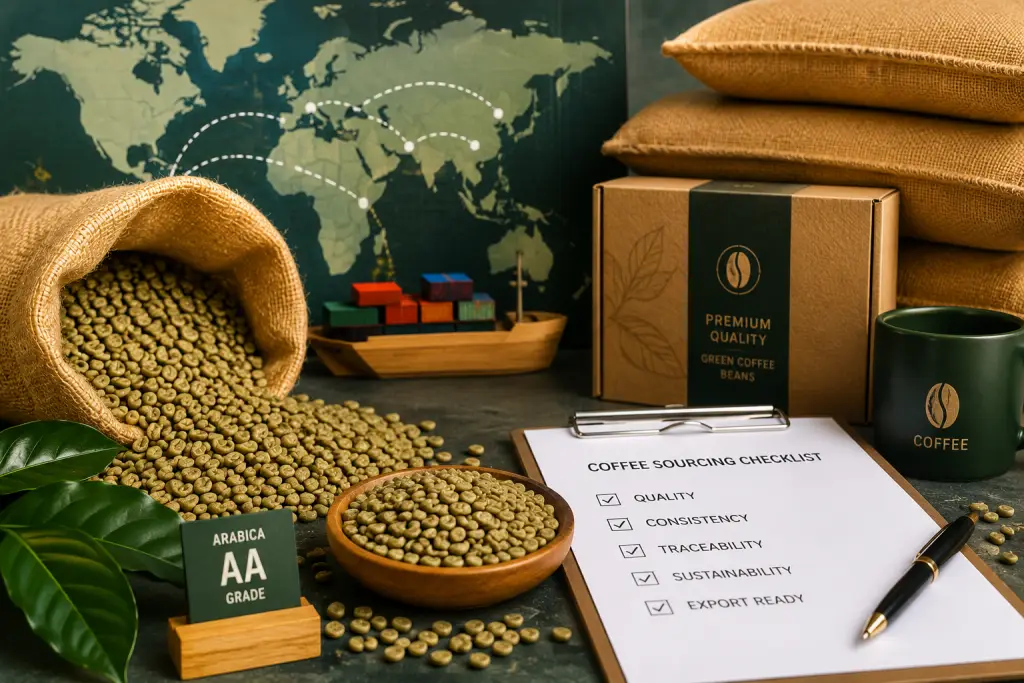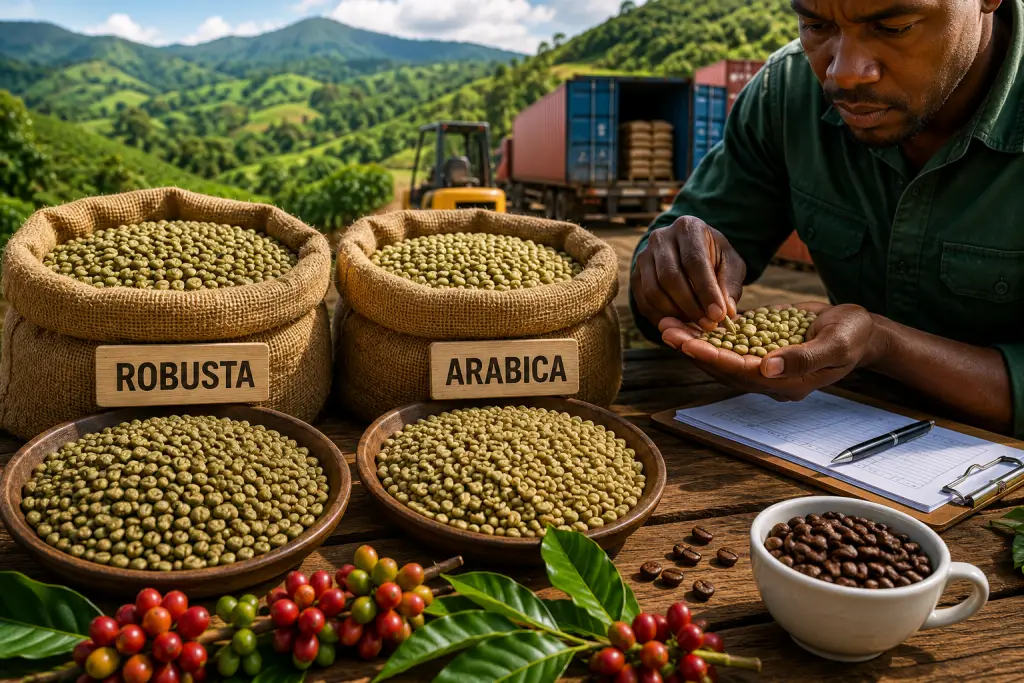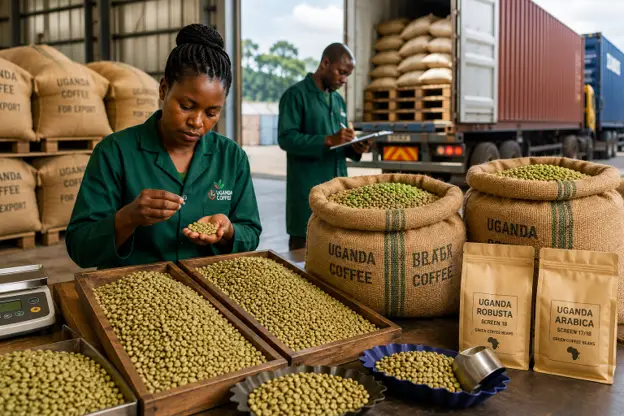











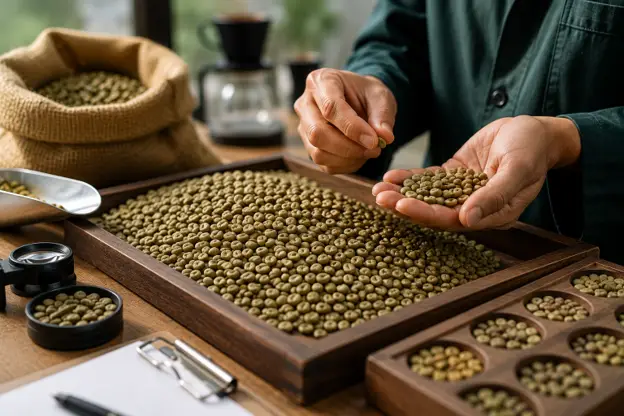
A large green coffee bean can look impressive sitting in your hand, but size alone doesn’t tell you much. Arabica coffee AA grade beans are known mainly for their larger screen classification, yet there’s a lot more a buyer needs to check before judging a lot fairly. Shape, density, moisture, colour, surface condition, and visible damage all play into how evenly the coffee roasts and how well it holds up in storage. Looking at all of these together, not just size, gives importers and roasters a far more honest picture of what they’re actually buying.
What the AA Grade Really Tells You
AA is, at its heart, a sorting classification tied to the physical size of green coffee. During coffee grading, beans get passed through screens with different-sized openings, which is what separates the larger coffee from the smaller pieces.
That label can tell you how a lot was sorted, but it says nothing about flavour, freshness, or how carefully it was prepared. Two lots carrying the exact same grade can still differ wildly in colour, moisture, internal structure, and defect count. Treat the grade as a starting point for evaluation – not the conclusion.
Start With Size and Uniformity
The first thing worth checking visually is bean size — specifically, how closely the beans match one another.
- Similar dimensions — a well-sorted sample should show reasonably consistent width and length across the board
- Fewer small pieces — a noticeable amount of undersized coffee usually points to incomplete sorting
- Balanced shape — some natural variation is fine, but broken, flat, or oddly formed beans are worth a second look
- Even roasting potential — beans of similar size tend to respond to heat at roughly the same pace
- Full-sample review — a handful of good-looking beans doesn’t represent an entire shipment, so check a broad portion, not just the top layer
Size gives you useful information, but it can’t tell you what’s actually going on inside each bean.
Density Affects Roasting Behaviour
Two beans can look almost identical while carrying very different weight and internal firmness. Bean density is really just how much coffee material is packed into a given amount of space.
Denser coffee often needs a different roasting approach, since heat moves through it at a different rate. Altitude, maturity, variety, and processing method can all shift this. When density varies too much within a single lot, some beans end up roasting faster than others – and that makes it genuinely hard to get an even colour or a repeatable flavour batch after batch.
Moisture Needs Careful Attention
Moisture content in green coffee affects both how well it stores and how consistently it roasts.
- Too much moisture — coffee holding excess water tends to lose stability over long storage or transport
- Too dry — beans that have lost too much moisture often roast fast and can start showing signs of ageing
- Uneven readings — differences from bag to bag can throw off roasting consistency
- Storage conditions matter — heat, humidity, and poor warehouse handling can all shift moisture over time
- Proper packaging helps — the right liners and dry storage limit unwanted changes during shipment
- Ask for current numbers — recent measurements matter far more than old records sitting in a file
Once moisture’s been reviewed, the coffee’s outer appearance can add a bit more to the picture.
Colour and Surface Condition Matter
Green coffee should look reasonably even across a sample. Faded colouring can hint at age, while dark spots, odd marks, cracked surfaces, or broken edges can point to problems that happened somewhere during processing or storage.
Colour on its own proves nothing about freshness or how the coffee will actually cup. It needs to be weighed alongside crop info, smell, moisture data, and an actual roast test. A lot that looks great can still perform poorly, while a bit of colour variation might be completely harmless if everything else checks out.
Defects Can Affect More Than Appearance
Visible coffee defects can throw off roasting consistency and pull down the overall value of a lot.
- Broken pieces — fragments generally roast faster than whole beans
- Insect damage — small holes or damaged surfaces usually point to pest activity
- Black or dark beans — often the result of harvesting, drying, or storage issues
- Immature coffee — underdeveloped beans differ in colour, weight, and how they respond to roasting
- Foreign material — stones, sticks, husks, and similar debris suggest cleaning wasn’t thorough
- Heavy variation — a high count of irregular beans makes the entire batch less predictable
A small number of minor flaws is usually acceptable within a grade, but the actual count and type of damage still matter quite a bit.
Strong Lots Show Balance Across Every Check
Reliable export-quality beans hold up well across several physical checks — not just one attractive feature. Large size doesn’t mean much if the coffee was badly dried, heavily damaged, or wildly uneven in density. A clean-looking sample isn’t enough either if moisture swings between bags.
The most reliable evaluation pulls together screen classification, visual inspection, moisture records, density data, roast testing, and an actual cup assessment. Together, these checks tell a buyer whether the coffee is actually going to deliver consistent results once it reaches the roastery.
Look Beyond the Grade Label
AA gives buyers a decent starting point, but genuinely dependable coffee selection takes a closer look than that. Size, density, moisture, colour, and defect control all reveal how carefully a lot was prepared – and how consistently it’s likely to perform. Reviewing these features together lets importers and roasters make decisions based on the coffee’s actual condition, not just the grade name printed on the bag. Cents Coffee supports wholesale and export buyers with carefully selected Ugandan Arabica and clear, honest lot information.
FAQ’s
1. What does AA grade mean for Arabica coffee beans?
AA grade refers to larger-sized Arabica coffee beans sorted through a screen grading system. It indicates bean size but does not guarantee flavor or overall quality.
2. Does a larger AA coffee bean always produce better coffee?
No. Bean size is only one quality factor. Density, moisture content, processing, freshness, and defect levels all influence the final cup quality.
3. Why is bean density important when selecting Arabica coffee?
Bean density affects heat absorption during roasting, helping achieve more even roast development and consistent flavor.
4. What moisture level should buyers check in green coffee beans?
Importers should request current moisture test results for each lot, as proper moisture levels help maintain storage stability and roasting consistency.
5. What physical defects should buyers inspect before purchasing AA grade beans?
Check for broken beans, insect damage, black beans, immature beans, foreign materials, and uneven color, as these defects can impact roasting performance and cup quality.