





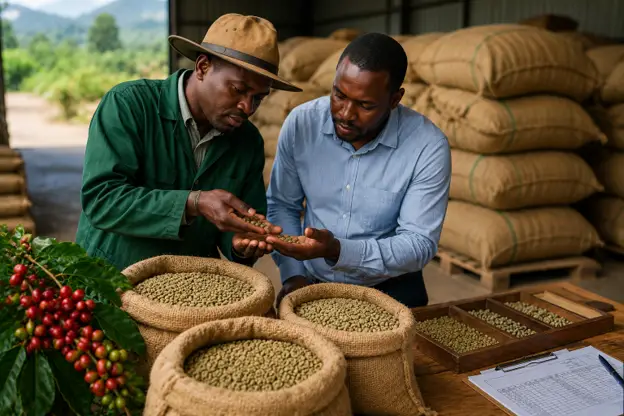
Direct trade Ugandan coffee isn’t just a phrase printed on a bag. It’s about actually knowing the farmers, exporters, quality checks, and export journey standing behind the beans. For buyers who care about flavor, consistency, and where their coffee really comes from, that connection turns a routine purchase into something closer to a real sourcing decision.
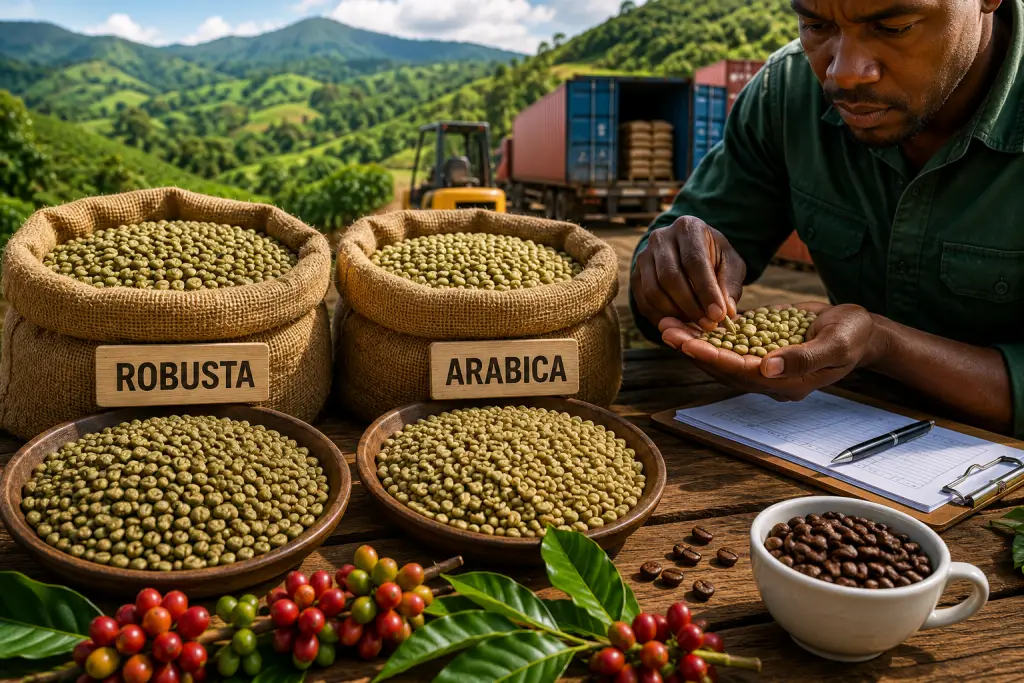
Take a roaster picking out Robusta Screen 15 for an espresso blend. They’re not just after strength they want full body, thick crema, nutty depth, dark chocolate notes, and grading they can actually count on. When the sourcing is transparent, they can trace how that coffee was handled, packed, and supported long before it ever reaches the roastery.
What Does Direct Trade Coffee Mean?
Direct trade coffee comes down to relationships, not just transactions. Rather than buying coffee with almost no background, buyers work closer to farming communities, cooperatives, and exporters who actually understand the beans from origin through export.
That kind of relationship tends to give buyers a few real advantages: clearer origin and grade information, better back-and-forth on quality and availability, more visibility into drying and handling, stronger ties to farmers and exporters, and an honest story worth sharing with customers.
It’s not a label you slap on a bag, though. The value comes from proof samples, actual communication, and supply that shows up consistently, season after season.
| Area | Conventional Coffee Sourcing | Direct Trade Ugandan Coffee |
| Origin visibility | Buyers often know little beyond country or basic grade | Clear detail on origin, grade, handling, and supplier connection |
| Relationship | Mostly transactional, price-driven | Built on relationship between buyers, exporters, and farmers |
| Quality communication | Limited feedback loop | Real discussion on flavor, grading, samples, future supply |
| Traceability | Coffee can feel anonymous | A clearer story tied to Uganda, farmers, and preparation |
| Buyer confidence | Rests mostly on supplier claims | Built through samples, grade clarity, and repeated trust |
| Brand story | Generic, not origin-focused | Stronger story for cafés and roasters selling Ugandan coffee |
Why Uganda Matters in Coffee Sourcing
Uganda’s coffee identity runs deep, especially in Robusta, while Arabica and Druger keep pulling in buyers after more character and origin value. That range makes Uganda useful whether you’re buying for commercial roasting or something closer to speciality.
Different grades tend to serve different needs. Robusta Screen 15 works well for espresso blends where body and crema matter most. Robusta Screen 18 suits buyers who want larger beans and stronger visual quality. Arabica leans toward smoother, cleaner cups for more refined roasting. Drugar appeals to buyers chasing that naturally processed Ugandan character specifically.
That variety gives roasters and importers real flexibility building blends, testing a new origin, or just expanding what’s already in the green coffee lineup.
How It Supports Ethical Coffee Sourcing
Ethical coffee sourcing gets a lot stronger once farmers stop being hidden behind an unclear supply chain. A closer buying relationship puts real attention on farming effort, preparation quality, and partnerships that actually last.
That shows up in a few concrete ways: better communication running both directions between farmers, exporters, and buyers; more respect for the actual work behind growing and preparing the coffee; value based on quality rather than price alone, and stronger coffee farmer partnerships hold up season after season, not just for one order.
For coffee brands, it also builds customer trust. A café or roaster can speak with real confidence about why a specific Ugandan grade was chosen and how it earns its place in the final cup.
Why Transparency Builds Buyer Confidence
A transparent coffee supply chain cuts down on uncertainty. Buyers make better calls when they actually know the coffee type, grade, moisture level, packing method, and how responsive the supplier is going to be.
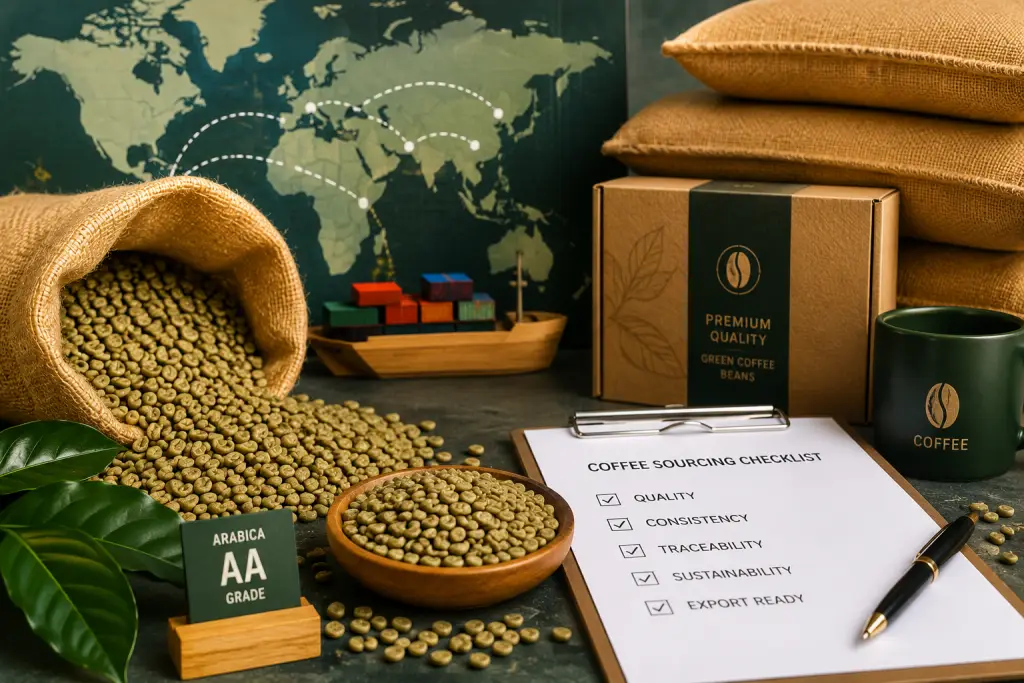
Before placing an order, it’s worth checking a few things: the coffee type and grade, flavor profile and best use case, moisture and defect standards, processing and drying method, sample availability, and whether documentation and shipping support are actually in place.
These details matter most for importers and roasters who need dependable coffee, not vague reassurances. Good sourcing gets built on clarity well before the shipment ever leaves origin.
The Role of Ugandan Coffee Exporters
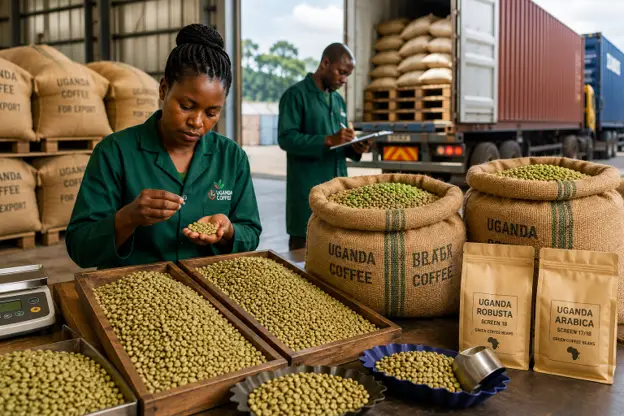
Ugandan coffee exporters are what turn farm-level coffee into something export-ready. They connect producers with international buyers while handling the unglamorous but critical steps of grading, storage, packing, documentation, and shipment coordination.
A reliable exporter brings a few things to the table: real farmer and community sourcing connections, quality checks before anything ships, clarity on grade and screen size, proper bagging, sample support, and consistent planning buyers can actually rely on.
That role matters more than it might seem. Even excellent coffee can lose value fast if the handling, packing, or communication behind it is weak. A good exporter protects both the quality of the beans and the buyer’s confidence in the whole process.
Why Direct Trade Ugandan Coffee Matters Today
Coffee buyers are getting more selective across the board. Roasters want flavor and consistency. Importers want clean documentation and supply they can count on. Cafés want a story customers actually believe. Specialty coffee sourcing and transparent practices are playing a bigger role in purchasing decisions than they used to.
For buyers, Uganda offers real options across Robusta, Arabica, and Drugar. With the right sourcing partner, comparing flavor, screen size, preparation, and sample results becomes a lot easier before committing to anything larger.
Cents Coffee helps buyers source Ugandan coffee with real attention to grade clarity, samples, packing, and export communication. Request a quote or sample details from Cents Coffee to compare available Ugandan grades and find the right coffee for roasting, importing, or café supply.
FAQ’s
1. What is direct trade Ugandan coffee?
Direct trade Ugandan coffee refers to coffee sourced through closer relationships between buyers, exporters, and farmers, providing greater transparency, quality control, and traceability.
2. Why do coffee roasters prefer direct trade coffee?
Roasters benefit from consistent quality, better communication, reliable grading, and detailed information about the coffee’s origin and processing.
3. What types of Ugandan coffee are available through direct trade?
Buyers can source Robusta Screen 15, Robusta Screen 18, Arabica, and Drugar coffee depending on their roasting and blending requirements.
4. How does direct trade improve coffee quality?
Direct trade encourages better handling, grading, drying, and communication throughout the supply chain, helping maintain consistent bean quality.
5. Why is Uganda a popular coffee sourcing destination?
Uganda produces both premium Robusta and high-altitude Arabica, offering diverse flavor profiles, export-quality standards, and reliable supply for global buyers.