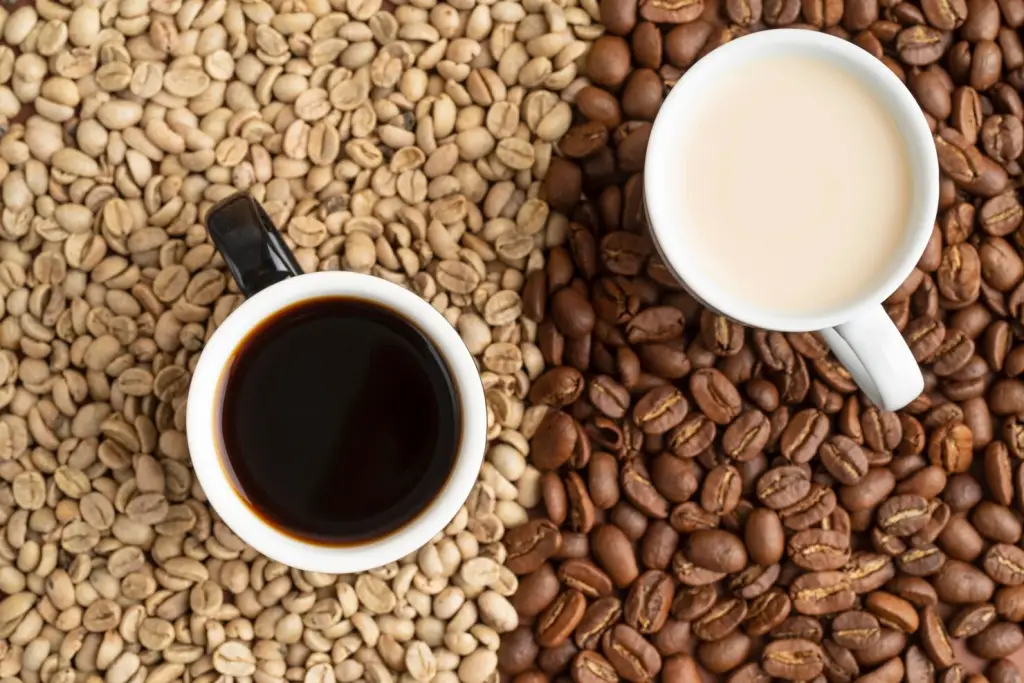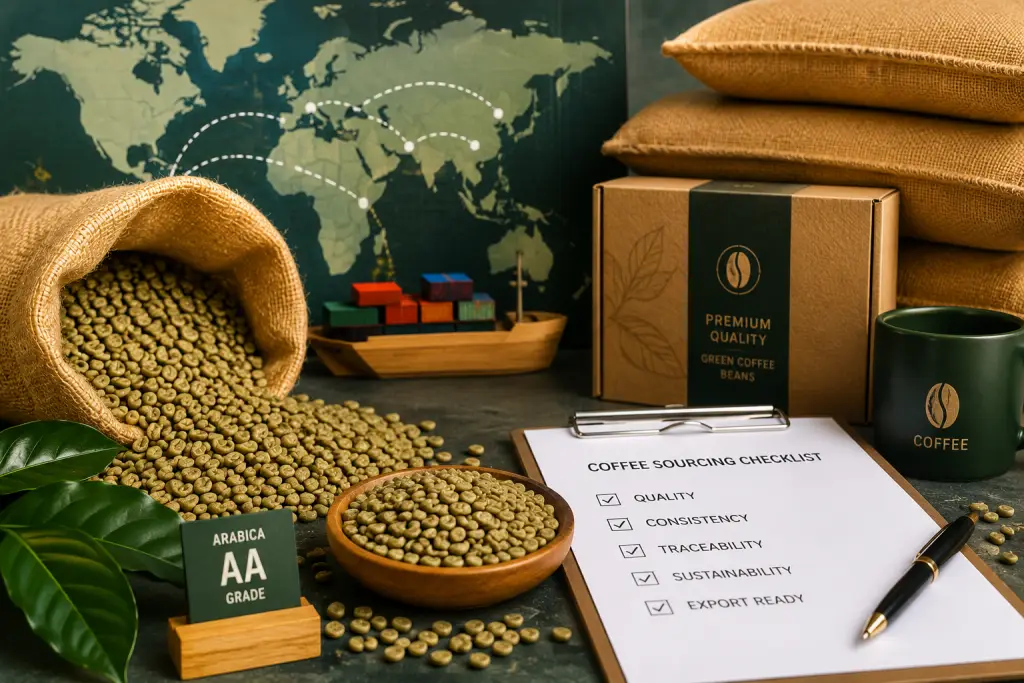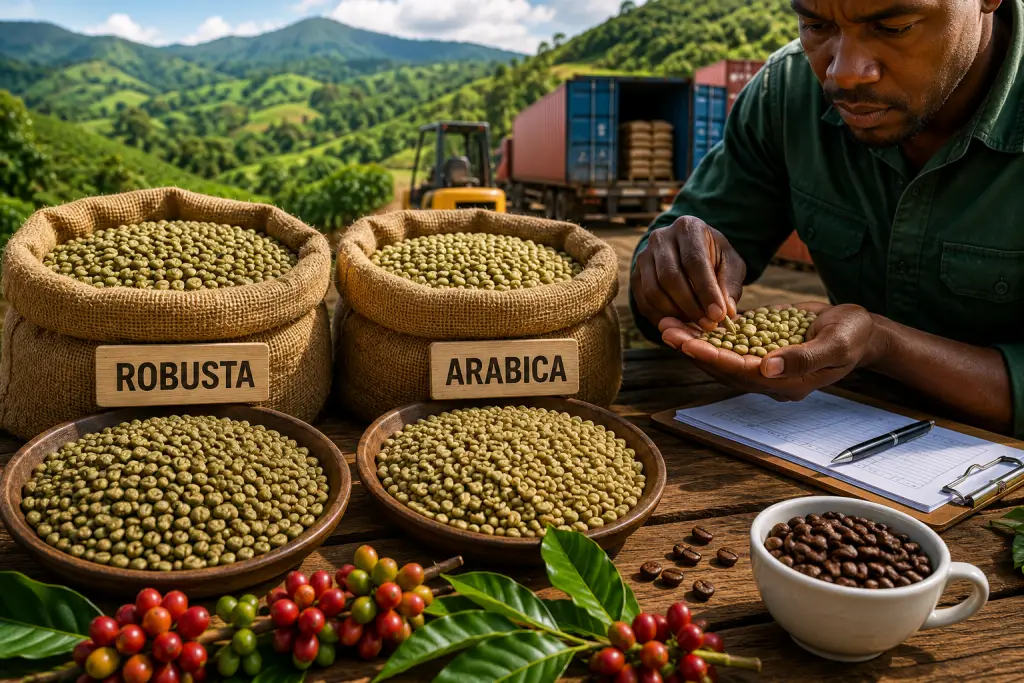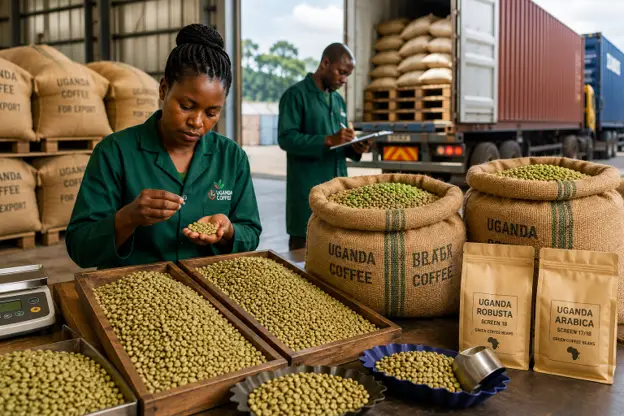











Two samples sitting side by side can look nearly identical and still perform completely differently once they hit the roaster. One might be carrying more moisture than it should, another could have defects tucked away out of sight, and a sample that looks less impressive on the table might actually pour a cleaner cup. When it comes to green coffee bean selection Uganda, the real answer lies in checking the whole lot properly, not in judging by price tag or looks.
1. Know What You’re Making Before You Start Looking
Figure out the end product first. A premium single-origin roast calls for different qualities than beans destined for espresso blends, instant coffee production, or a budget retail line. Once that target is clear, every other decision down the line gets a lot simpler.
2. Track the Coffee Back to Where It Came From
Solid origin selection means going further than just spotting “Uganda” printed on a quotation sheet. Ask about the growing region, the district, altitude, variety, and whatever traceability records are available. That’s often what explains why two lots taste, roast, or price out so differently from one another.
3. Look Closely at the Processing Method
How the coffee was processed shapes cleanliness, flavor, and consistency across the board. Before moving forward, it helps to know whether the lot went through washed or natural processing and how the cherries or beans were dried once picked. Drying that wasn’t controlled evenly can leave inconsistent moisture pockets throughout a batch, so it’s worth asking how the coffee was handled and stored after processing wrapped up too.
4. Check How Old the Crop Is and How It’s Been Stored
Coffee doesn’t stay static in storage freshness shifts over time, sometimes faster than buyers expect. A few things tend to matter most here: the crop year or harvest date, how clean the warehouse actually is, and what kind of bag and inner lining was used to hold the coffee. It’s also worth asking about exposure to dampness or unusual smells, since either one can fade the bean’s color and dull its character before it even reaches your roaster.
5. Verify the Moisture Level
The moisture content listed on paper needs to line up with what was actually agreed upon. Beans holding too much moisture risk storage issues down the road, while beans that are too dry can lose character and roast unpredictably.
Push for a test result tied specifically to the lot in front of you. A generic figure isn’t much use if nobody can connect it to the actual shipment.
6. Pay Attention to Bean Density
Bean density changes how coffee reacts to heat during roasting. Two beans can look the same size and still roast completely differently because what’s happening inside them isn’t the same.
Worth reviewing:
- How firm and heavy the beans feel in hand.
- Whether density holds steady across the sample.
- How the coffee behaves in a test roast.
- Whether that outcome actually fits your planned product.
7. Check for Physical Defects
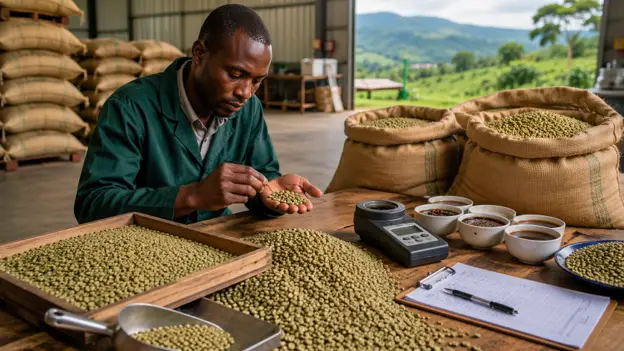
Coffee defects you can actually see will affect flavor, sorting losses, and how consistent production ends up being. Spread the sample out on a flat surface and go through it carefully, checking for black or sour beans, chipped or broken pieces, and any signs of insect damage. Stones, husks, mould, and uneven colouring are the other usual culprits, and whatever turns up should get measured against the defect allowance written into the contract.
8. Assess How Uniform the Lot Really Is
Even size, color, and condition across a lot tend to support steadier roasting. That said, a tidy-looking sample doesn’t automatically mean strong coffee bean quality appearance has to be weighed alongside moisture, density, defects, processing, and how it actually tastes.
The sample also needs to be genuinely representative. A hand-picked handful that looks great won’t help you if it doesn’t reflect what’s actually getting shipped.
9. Taste With the End Product in Mind
Cup testing only means something when it’s measured against what you’re actually planning to make, not personal preference alone. A bright, lively coffee can shine on its own and still fall flat once it’s pushed into a dark roast or a milk-based espresso drink. During tasting, pay attention to how clean the cup is, whether there’s real sweetness and body, how the acidity comes across, and what lingers in the aftertaste and don’t ignore how the coffee actually performs once it reaches the roast level you intend to use.
10. Make Sure Export and Supply Are Actually Ready
Export-quality coffee also depends on reliable packing, paperwork, and delivery timing, not just what’s in the cup. Before signing off on an order, confirm how much quantity is genuinely available and whether the sample matches what will actually get shipped. Bag weight, packing materials, port of loading, and expected lead time all deserve a second look too, along with inspection arrangements, origin and phytosanitary documents, and what happens if the shipment ends up outside spec.
Bringing It All Together
Choosing green coffee beans in Uganda works best when it follows a clear sequence: define the product, trace the source, inspect the lot, taste it against the intended use, and confirm the shipment is actually ready to go. Skipping steps is usually how one appealing detail ends up masking a bigger problem.
Cents Coffee can share available Ugandan Arabica and Robusta specifications and samples, helping importers compare lots properly before placing an order.
FAQ’s
1. What should I check before buying green coffee beans from Uganda?
You should review the bean origin, moisture content, density, processing method, defect count, screen grade, and export documentation before placing an order.
2. Why is moisture content important in green coffee beans?
Proper moisture levels help preserve bean quality, improve storage stability, and ensure consistent roasting performance.
3. How do coffee defects affect bean quality?
Defects such as black beans, broken beans, insect damage, and foreign materials can negatively impact flavor, roasting consistency, and overall coffee quality.
4. Why does bean density matter for roasting?
Bean density influences heat absorption during roasting, affecting flavor development, roast consistency, and final cup quality.
5. How can importers verify the quality of Ugandan green coffee?
Importers should request representative samples, cup-test the coffee, review quality specifications, inspect moisture and defect reports, and verify export documentation before purchasing.
6. What is the best way to choose the right green coffee beans for a roastery?
Start by identifying your target coffee product, then compare bean varieties, quality parameters, origin, processing methods, and supplier reliability to select the most suitable lot.