





Every new coffee buyer hits the same fork in the road. You’re sourcing green coffee for the first time, quote requests are piling up, and somewhere in the first conversation with a supplier, the question lands: Arabica or Robusta? It sounds simple. It isn’t, not when your roast profile, your margins, and your customers’ expectations all hinge on getting it right.
This guide breaks down the real differences behind arabica vs robusta coffee, covers caffeine, flavor, and roast levels, and answers the question buyers actually care about: Which one does Uganda grow, and does it matter for your order?
Arabica vs Robusta: Flavor, Caffeine & Growing Conditions
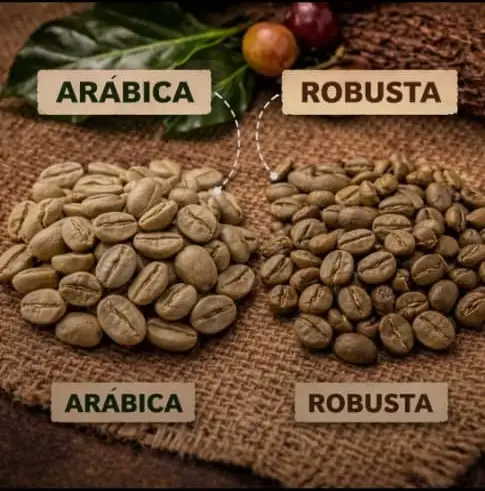
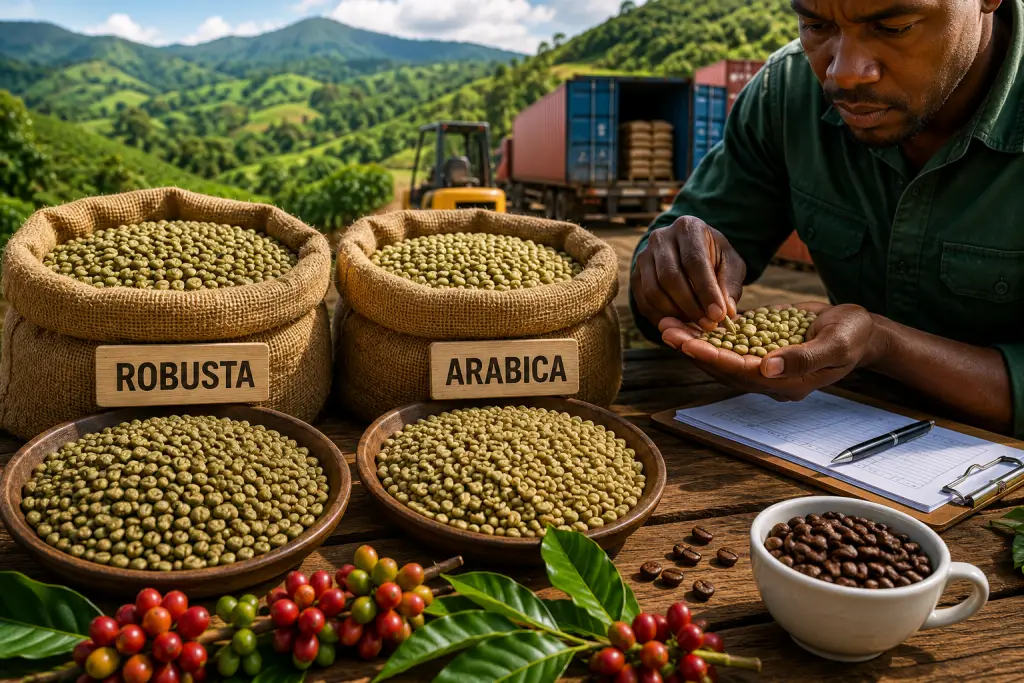
Once you get past the name recognition, arabica vs robusta really comes down to five practical factors. Here’s the side-by-side:
|
Factor |
Arabica |
روبوستا |
| Flavor | Smooth, mild, more acidity, aromatic complexity | Bold, strong, heavier body, lower acidity |
| Caffeine content | Around 1.5% | Around 2.7% |
| Growing altitude | 1,000 to 2,200 meters, prefers cooler highland climates | Sea level to 800 meters, tolerates heat and humidity |
| Plant hardiness | Delicate, vulnerable to pests and frost | Hardy, disease-resistant, easier to farm |
| Market position | Priced at a premium, specialty-grade positioning | Priced lower, historically boxed in as commercial-grade only |
That last row is where most of the confusion starts. Robusta costs less to grow because the plant itself is tougher; it survives heat, pests, and rough handling that would wipe out an Arabica crop in the same season. Somewhere along the way, that lower cost got mistaken for lower quality, and the reputation stuck even as growing and processing standards improved dramatically. It’s worth retiring as a myth:
- Screen-graded Robusta (Screen 12, 15, 18) gets sorted and exported to the same rigor as any specialty-grade coffee.
- Size, moisture content, and defect count are controlled the same way they would be for a top Arabica lot.
سنتس كوفي exports exactly this kind of graded Robusta, not the bulk filler beans that built the outdated stereotype in the first place.
On robusta vs arabica caffeine, the gap is real, and it shapes how each bean actually gets used. Higher caffeine means more resistance to bitterness under heat, which is exactly why Robusta holds up so well in espresso, where hot water moves through the grounds fast and a weaker bean would taste thin and flat. Arabica’s lower caffeine content leaves more room for the sugars and acids already in the bean to come through, which is a big part of why it reads as “smoother” once it’s in the cup.
Where Liberica and Excelsa Fit In
Arabica and Robusta cover roughly 99% of global coffee production, but they’re not the only types of coffee beans buyers run into. Two lesser-known species show up often enough in sourcing conversations to deserve a quick mention:
- Liberica: grown mostly in the Philippines and parts of West Africa. Floral, almost smoky, with caffeine around 1.2%, lower than either Arabica or Robusta. Supply stays limited and inconsistent, so it lives on as a niche, collector-style item rather than a commercial staple.
- Excelsa: close to Liberica botanically but tastes nothing like it. Tart, fruity, with caffeine around 1.1%. Rarely sold on its own; roasters fold small amounts into blends for a complexity neither Arabica nor Robusta produces alone.
Neither species changes the buying decision for most commercial roasters.
How Roast Level Changes the Cup

Getting coffee roast levels explained in plain terms comes down to one variable: how long the bean stays on the heat. The bean sets the ceiling. The roast decides what actually survives to the cup.
- Light roast: stops just after the bean develops. Bright, mild acidity mostly intact. Arabica’s origin character shows up clearest here, florals, citrus, the specific soil and altitude it grew in. Push Robusta to this light, and it turns thin and grassy fast.
- Medium roast: the default most people reach for. Brightness mellows, body builds, and the cup lands smooth and approachable rather than sharp.
- Medium-dark roast: trades acidity for richness. Sugars caramelize further, the body thickens, and the flavor turns bolder without tipping into ash. Common ground for blends that mix Arabica and Robusta together.
- Dark roast: oily surface, heavy body, smoky-bitter notes that dominate whatever origin character the bean started with. Robusta handles this well since its lower acidity and higher caffeine don’t fade the way Arabica’s delicate notes would, which is exactly why it shows up so often in espresso blends built for crema and strength over nuance.
If you’re building a roasted line rather than sourcing green, Cents Coffee’s own roasted coffee beans follow this same species-to-roast logic already: Arabica-forward blends kept lighter, Robusta-heavier blends pushed darker for body.
Which One Is Ugandan Coffee?
Here’s the answer buyers actually came here for, and it doubles as the clearest real-world difference between arabica and robusta availability you’ll find: Uganda grows both, but not in equal measure. Robusta accounts for roughly 80% of national production, with Arabica making up the remaining 20%. That split isn’t an accident of geography.
Robusta is native to Uganda, growing wild around the Lake Victoria basin long before it became a commercial crop, while Arabica thrives in the country’s high-altitude regions like Mount Elgon and the Rwenzori Mountains.
For a buyer sourcing from Uganda specifically, that 80/20 split matters more than it looks at first glance. It means:
- Robusta supply is deep, consistent, and backed by a grading system refined over decades.
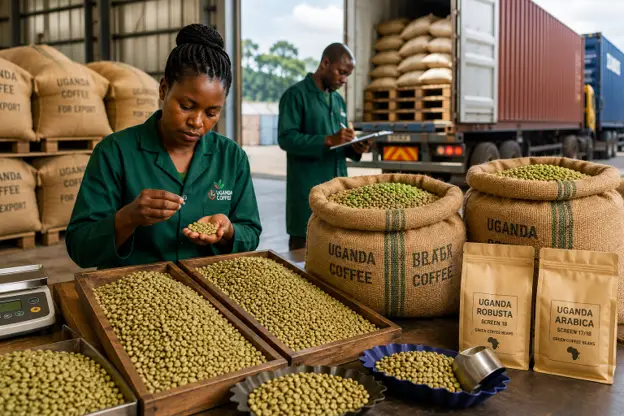
- Uganda’s Robusta sorts into Screen 12, 15, and 18, small to large bean sizes, each suited to different blend and roast strategies.
- Screen 18 in particular sits closer in commercial standing to a top Arabica grade than to the bulk Robusta stereotype.
- Arabica from Uganda, smaller in volume but not in quality, typically comes as Washed AA/AB, a fully washed process producing a brighter, cleaner cup, or as Drugar, a naturally dried process that leans into sweetness and fruit character instead.
If you’re sourcing from Uganda, the practical takeaway is this: don’t treat “Ugandan coffee” as one product. Ask which grade, which processing method, and which region a lot came from, the same way you’d ask about any other origin. When evaluating a supplier, that level of detail is usually the fastest way to tell a serious exporter from a middleman reselling generic stock.
Finding Your Fit
There’s no universal winner in the arabica vs robusta coffee debate, and there never was going to be one. Arabica suits buyers chasing nuance, acidity, and a lighter, origin-driven cup. Robusta suits buyers who need strength, crema, and a bean that performs reliably at scale. The right answer depends on what you’re building, not on which bean has the better reputation.
Ready to source directly from Uganda?
- Get a Quote: Tell us what you’re working with, and we’ll match it to a grade.
- Browse All Products to compare grades side by side before you decide.
Cents Coffee ships both Robusta and Arabica straight from Kampala, graded, traceable, and ready for export.
أسئلة متكررة
What is the main difference between Arabica and Robusta coffee?
Think smooth versus strong. Arabica leans mild and acidic, Robusta leans bold and bitter-resistant, and the plant, growing conditions, and end use all follow that same split.
Is Robusta coffee lower quality than Arabica?
That reputation is outdated. Screen-graded Robusta like Screen 12/15/18 gets sorted and exported with the same care as any specialty-grade Arabica.
Does Uganda grow Arabica or Robusta coffee?
Both, but Robusta runs the show at roughly 80% of national output. Arabica takes the remaining 20%, mostly from high-altitude regions like Mount Elgon.
Which has more caffeine, Arabica or Robusta?
Robusta, and it’s not close: about 2.7% versus Arabica’s 1.5%. That extra kick is exactly why Robusta owns the espresso shot.
What roast level is best for Arabica vs Robusta?
Arabica shows off best light to medium, where its acidity survives. Robusta shrugs off medium-dark to dark and still delivers body and crema.