










Uganda has carved out a stronger place in international coffee sourcing simply because it can meet more than one kind of market demand at once. The growing pull toward Ugandan Robusta and Arabica coffee beans comes down to the country’s ability to supply commercially useful Robusta right alongside distinctive highland Arabica.
For roasters, importers, distributors and private-label brands, that combination is a real sourcing advantage. Uganda isn’t boxed into one flavour style, one type of buyer, or one price tier. Its coffee sector can carry mainstream blends, espresso products, premium retail lines, and origin-led offerings all at the same time.
Uganda Has a Broader Market Position
Plenty of coffee-producing countries get known for one bean type or one product category and not much else. Uganda plays a wider role, because both Robusta and Arabica pull real weight in its coffee sector.
That opens up several commercial possibilities for buyers in the global coffee market:
- Robusta covers products where strength, body, and intensity are the point.
- Arabica covers lines built around aroma, origin, and cup character.
- Importers can build both value-led and premium ranges out of one country.
- Distributors can serve cafés, retailers, and commercial buyers with completely different needs.
- Private-label brands can put together multiple products without leaning on just one bean category.
That range is exactly what keeps Uganda relevant across so many different corners of the international coffee trade.
Robusta Is Valued for More Than Just Being Cheap
Ugandan Robusta has always mattered to commercial coffee production, but its appeal isn’t just about price anymore. Buyers have come to understand that Robusta does a specific job — and does it well.
It tends to get picked for a handful of reasons:
- A heavier mouthfeel shows up in blended coffee once Robusta’s in the mix.
- Espresso-based drinks pick up real intensity from it.
- Customers who want a stronger cup are usually pointed toward products built around it.
- Higher-caffeine product lines rely on it.
- It holds up well in dark-roast and soluble coffee applications.
- Wholesale coffee buyers get practical volume options out of it.
Better processing and grading have also pushed up interest in higher-quality Robusta specifically. Buyers now look more closely at origin, preparation, and consistency instead of treating every Robusta lot as basically the same thing.
Arabica Supports Premium and Origin-Led Products
Ugandan Arabica does a different job entirely. Grown at higher elevations, it can deliver the aroma, acidity, and regional character that more differentiated products need.
Businesses chasing premium coffee beans tend to look at Ugandan Arabica for a few reasons:
- Roasters get an alternative to origins that are already everywhere.
- Single-origin and limited-release products are a natural fit for it.
- Regional storytelling becomes a real option once you’re working with it.
- Buyers interested in washed or naturally processed lots find plenty to work with here.
- Cafés and retailers can build a genuinely distinctive premium range around it.
- Specialty coffee suppliers get another African origin worth putting in front of customers.
That demand isn’t just about flavour, either — it’s also about the commercial need for real variety inside a premium coffee portfolio.
Buyers Are Expanding Their Origin Networks
International coffee businesses are constantly juggling shifting prices, crop availability, climate risk, and transport disruptions. Leaning too heavily on one producing region is a good way to get caught out when supply conditions change.
That’s part of why the modern coffee trade is leaning harder into origin diversification.
Buyers add Uganda to their sourcing network for a few practical reasons:
- It cuts dependence on a small handful of producing countries.
- Both Robusta and Arabica supply stay within reach at the same time.
- There’s a fallback option in place once prices start swinging.
- Direct ties with origin-based exporters tend to get stronger over time.
- It’s easier to react quickly once customer demand shifts.
- One supply base can cover a wider spread of quality and volume needs.
That’s really where Uganda benefits — its coffee sector handles big commercial programmes without any trouble, but it’s just as comfortable supporting smaller, more differentiated product lines.
Being Export-Ready Is What Turns Production Into Global Demand
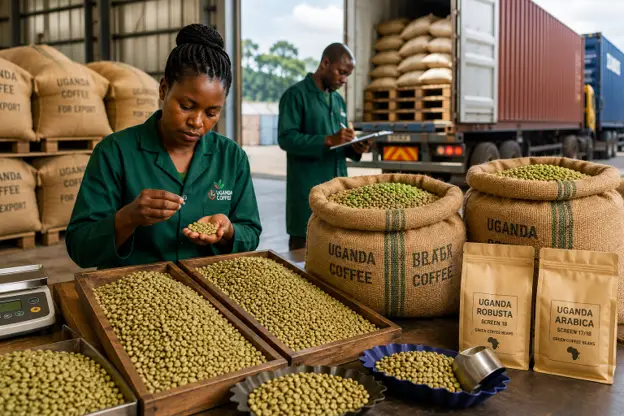
Growing good coffee is only half the job. Without dependable processing, grading, packaging, documentation, and shipment coordination behind it, overseas buyers just won’t feel confident enough to commit.
The steady growth of coffee exports Uganda has pushed the country further onto the radar of importers and roasting businesses. Export-ready suppliers make sourcing genuinely easier because they can offer:
- A clear picture of which coffee categories are actually available.
- Packaging that’s actually suited to international shipment, not an afterthought.
- Order quantities that get coordinated properly instead of guessed at.
- The documentation cross-border trade requires, ready when it’s needed.
- Direct communication about stock and timelines rather than radio silence.
- Room for both repeat orders and larger commercial requirements.
These things matter because buyers need confidence in the whole supply process — not just in the beans sitting in the bag.
One Origin Can Serve Several Product Strategies
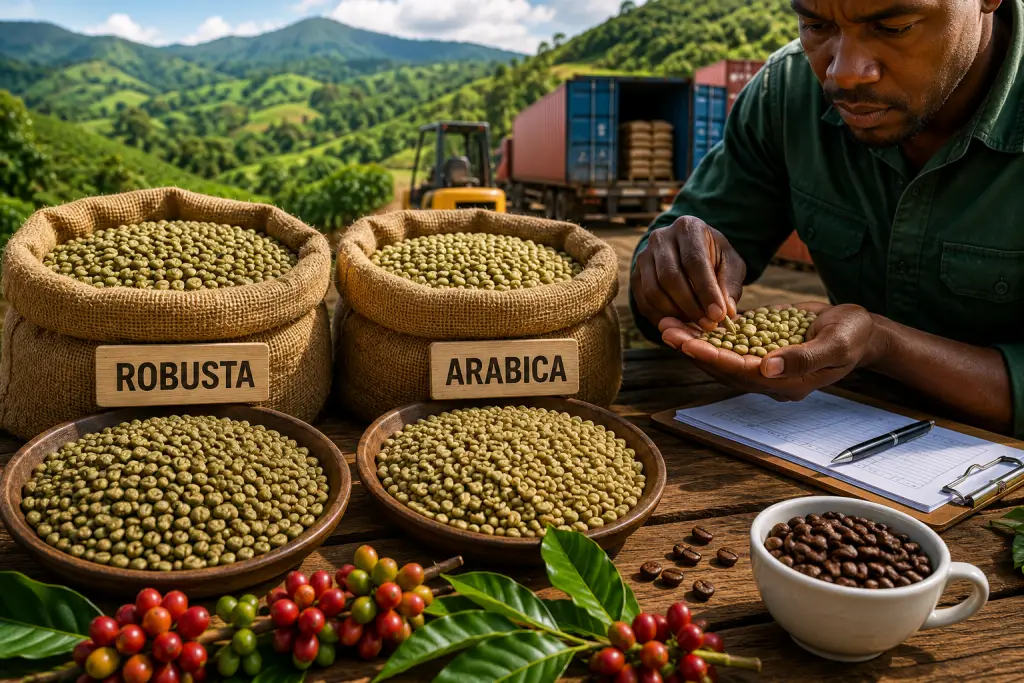
Demand for Ugandan Robusta and Arabica coffee beans holds up because the two beans serve genuinely different commercial purposes. Robusta backs espresso, strong blends, and volume-driven ranges, while Arabica helps build premium, traceable, origin-focused products.
Together, they let buyers put together a real mix:
- Entry-level product tiers sit alongside premium ones without much friction.
- Strong blends and lighter specialty offerings can both come from the same country.
- Retail coffee and food-service ranges draw from the same supply base.
- High-volume lines run right next to limited-origin releases.
- Separate customer groups end up with genuinely distinct products, not just relabelled versions of the same thing.
That combination gives Uganda more commercial value than origins tied to just one coffee category.
سنتس كوفي supplies Ugandan Robusta and Arabica for export and wholesale requirements. International buyers can get in touch to discuss available coffee options, order quantities, and current sourcing needs.
FAQ’s
1. Why are Ugandan Robusta and Arabica coffee beans becoming more popular?
They offer consistent quality, diverse flavor profiles, and reliable export supply, making them suitable for commercial and specialty coffee businesses worldwide.
2. What is the difference between Ugandan Robusta and Arabica coffee?
Robusta provides bold flavor, strong body, and higher caffeine, while Arabica offers smoother acidity, floral aromas, and complex tasting notes.
3. Are Ugandan coffee beans suitable for specialty coffee roasters?
Yes. High-altitude Ugandan Arabica is widely used by specialty roasters, while premium Robusta is increasingly valued for espresso blends.
4. Why do wholesale coffee buyers source from Uganda?
Uganda supplies both Arabica and Robusta, offers export-ready processing, and provides flexible order quantities for international buyers.
5. Can Ugandan coffee be used for espresso blends?
Yes. Ugandan Robusta adds crema, body, and intensity, while Arabica contributes sweetness and aroma for balanced espresso blends.