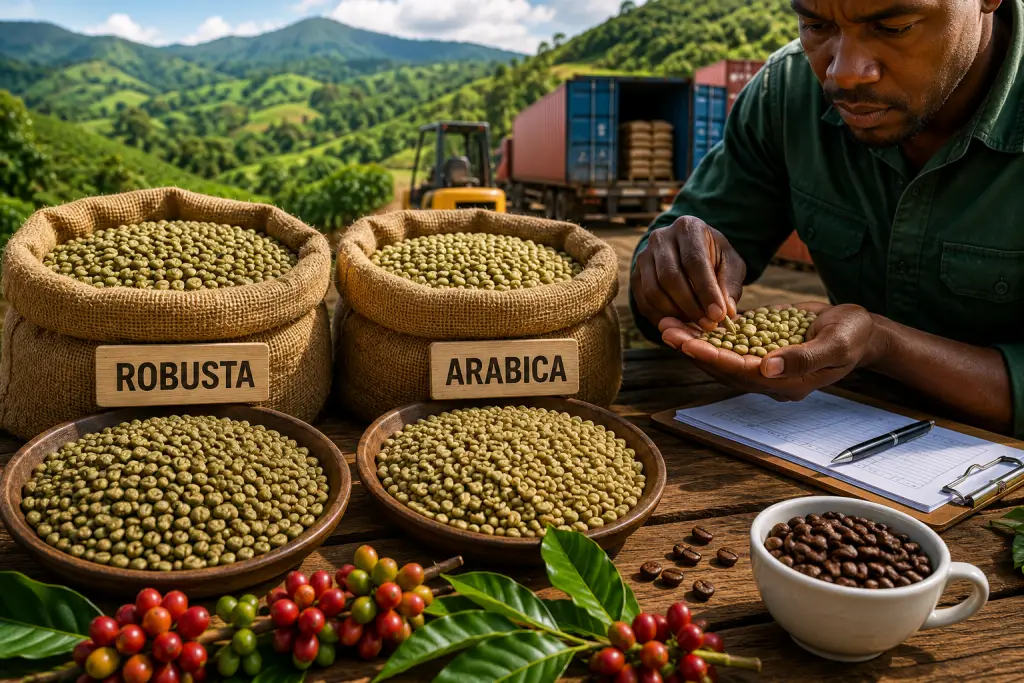








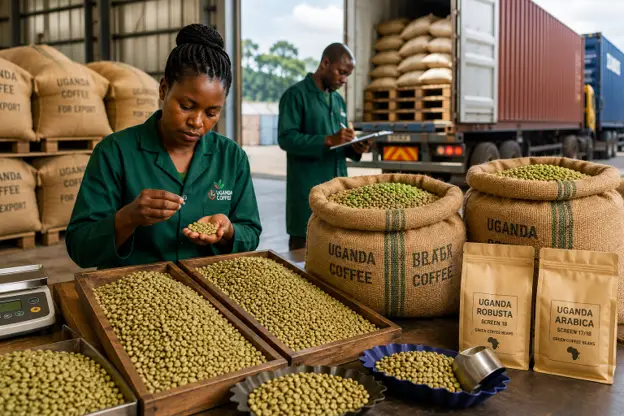
An origin earns real staying power when it can serve more than one need at once. Ugandan export coffee beans are catching attention for exactly that reason variety, practicality, and dependable performance across a wide range of coffee products. Uganda grows both Robusta and Arabica, which means importers and roasters can build bold blends, everyday retail lines, specialty releases, and private-label ranges all from the same country. That kind of range has helped Uganda step past its old role as a bulk exporter and pull in a much broader base of international buyers.
One Origin, Two Very Different Coffee Paths
Uganda’s real edge lies in the gap between its two coffee types. Robusta thrives naturally across the country’s lower-altitude regions and still drives most of its export volume. Arabica, on the other hand, grows in cooler, higher-terrain places like Mount Elgon and the Rwenzori Mountains.
That split gives buyers two genuinely different sourcing routes. One delivers volume, strength, and reliable blend performance. The other brings regional character and room for more selective roasting. Together, they give premium Ugandan coffee a foothold in both commercial-scale buying and higher-value specialty ranges.
Why International Interest Keeps Growing
A few practical reasons explain the rising demand:
- Coffee that fits nearly anywhere espresso, instant, retail blends, filter, private-label
- Robusta available in the depth and body that stronger-finish products need
- Growing curiosity around Arabica-growing regions with less familiar flavour profiles
- Flexible lot sizes and grades that suit different budgets and roast styles
- A broader shift toward African coffee exports, pulling buyers past the usual sourcing countries
- A balance of cup quality, volume, and cost that works across several market tiers
Robusta Is No Longer Just the “Basic” Option
Robusta used to get dismissed as the lower-tier choice, but that reputation is shifting fast. Roasters are paying much closer attention now to how it’s grown, dried, sorted, and stored, and better preparation shows up directly in the cup, with cleaner, more consistent lots.
Ugandan Robusta is widely used to add body, crema, and strength to espresso, and it holds up well in darker roasts and high-volume products. Those practical strengths are exactly why Uganda still matters so much in the global coffee trade, especially for brands that need dependable blend components without blowing their production budget.
Arabica Is Opening New Doors
The rise of specialty coffee Uganda is helping the country build real relationships with independent roasters and origin-focused brands.
- Flavour that shifts noticeably from one growing region to the next
- Fresh, seasonal menu options that feel genuinely new to customers
- Sourcing stories with real substance farm details, cooperatives, altitude, processing method
- Versatility across filter, medium roast, and select espresso applications
- Plenty of room for discovery, since most buyers still associate Uganda mainly with Robusta
Commercial Buyers Need More Than a Good Cup
An interesting cup gets attention, but repeat business comes down to the practical side clear grading, secure packaging, accurate paperwork, reliable shipping timelines, and communication that doesn’t fall apart under pressure.
A serious wholesale coffee supplier should be able to walk you through where the coffee was grown, how it was processed, what grades are on offer, and whether they can supply similar lots again down the line. Samples matter too country of origin alone can’t tell you how a specific coffee is actually going to perform once it’s roasted.
Where Ugandan Coffee Creates the Most Value
Within the coffee export market, Ugandan beans support a genuinely wide range of product categories:
- Full-bodied espresso blends
- Dark roasts with real character
- Instant coffee and soluble drink products
- Affordable retail blends
- Single-origin Arabica collections
- Limited seasonal releases
- Café house blends
- Private-label coffee ranges
That flexibility is really where the strongest demand comes from. Uganda isn’t boxed into one roast style, one customer type, or one price point.
A Source Country With Wider Market Reach
Uganda’s growing appeal comes down to serving both scale and variety at once. Robusta covers dependable commercial demand, while Arabica opens the door to regional identity and newer specialty opportunities. The end result is an origin that fits a lot of different buying goals without leaning on just one selling point.
For importers after carefully sourced Ugandan coffee whether for roasting, wholesale supply, or international distribution Cents Coffee offers beans selected with real export needs and market use in mind.
FAQ’s
1. Why are Ugandan export coffee beans becoming more popular?
Ugandan coffee offers both premium Robusta and Arabica varieties, consistent quality, and reliable export standards, making it attractive to global buyers.
2. What types of coffee does Uganda export?
Uganda exports high-quality Robusta and Arabica green coffee beans suitable for espresso blends, specialty coffee, retail brands, and commercial roasting.
3. Are Ugandan coffee beans suitable for specialty coffee?
Yes. High-altitude Ugandan Arabica is widely used for specialty coffee because of its bright acidity, fruity notes, and unique origin characteristics.
4. What makes Ugandan Robusta different?
Ugandan Robusta is known for its strong body, rich crema, chocolate and nutty flavors, making it ideal for espresso blends and dark roasts.
5. What should importers check before buying Ugandan coffee?
Importers should review bean grades, moisture content, processing methods, defect counts, sample quality, export documentation, and supplier consistency.