










Two suppliers can offer coffee under the exact same grade, and still hand over beans that behave completely differently — different freshness, different processing, different taste, different roasting results. Buyers who want to source Arabica coffee AA grade need to look past whatever grade is printed on the offer sheet. A successful purchase starts with a clear requirement, moves through sample testing, gets backed by written order terms, and ends with careful shipment planning. Skipping any of these steps usually means buying on price or bean size alone, and hoping it works out.
Define the Coffee Before Requesting Quotes
Clear buying instructions help a supplier recommend the right lot. Before asking anyone for pricing, work out how the coffee will actually be used and what the order genuinely needs to include.
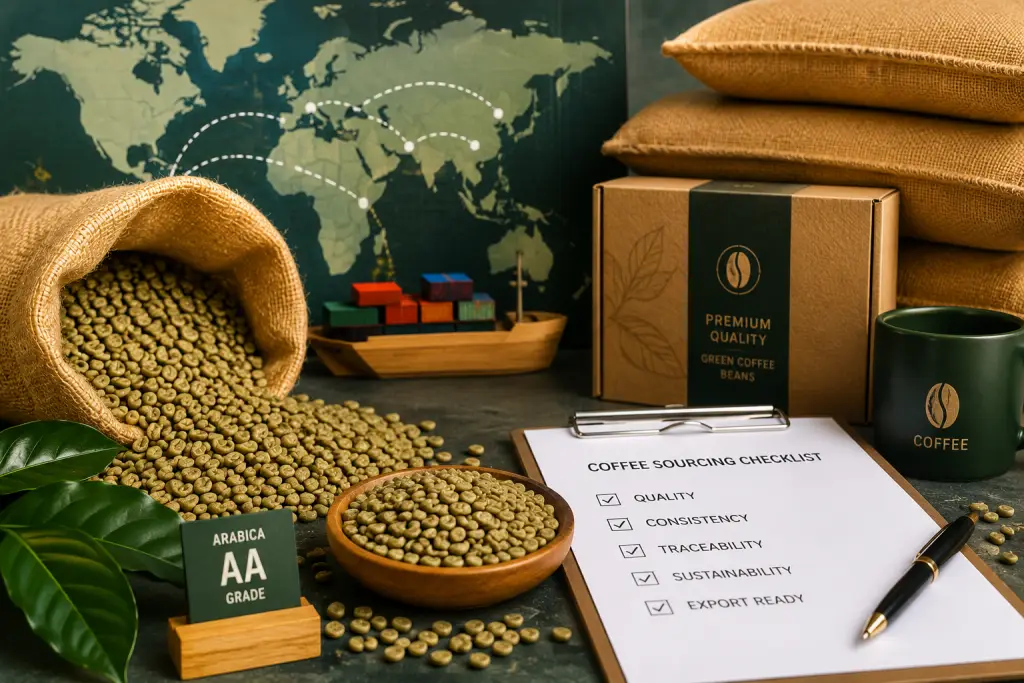
For effective B2B coffee sourcing, prepare the following:
- Planned order size: Trial quantity, partial load, or a larger commercial shipment.
- Roasting purpose: Espresso, filter coffee, retail packs, or a house blend.
- Preferred process: Washed, natural, or another available style.
- Expected taste direction: Kept simple — balanced, fruity, sweet, or chocolate-led.
- Packaging choice: Export bags, protective liners, markings, and bag weight.
- Delivery point: Destination country or port, so transport costs can be worked out accurately.
Know What AA Grade Actually Means
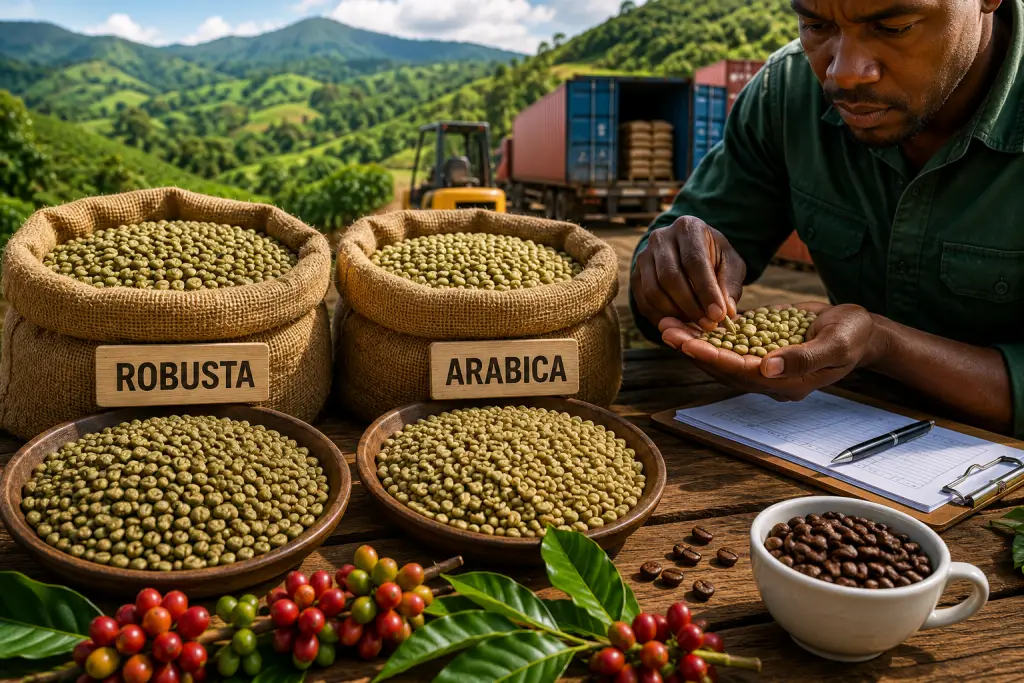
AA typically refers to a larger bean size within a recognised grading system. Larger beans may roast more evenly when a lot is well sorted, but the label alone doesn’t guarantee an excellent cup.
Region, harvest timing, drying, storage, moisture, and defect levels all shape the final result more than size does. A smaller bean from a well-prepared lot can outperform a larger bean that’s been stored poorly. Grade should be treated as one part of the buying decision — never the complete answer.
Check the Supplier Before Reviewing the Price
A credible green coffee supplier should hand over useful, specific information rather than lean on broad quality claims.
Look for:
- Clear details about origin, region, crop, process, and grade
- Current, accurate information on available quantities
- Samples linked to a specific lot, not a generic batch
- Genuine export experience and document support
- Straightforward answers about preparation and storage
- Realistic lead times for packing and dispatch
- Willingness to offer trial purchases before larger orders
- Consistent communication throughout the enquiry
A low quote can look attractive, but unclear product details tend to create expensive problems once the shipment actually arrives.
Use the Sample as the Main Decision Point
A sample shows exactly how the coffee behaves in real conditions. Check the beans before roasting, watch their consistency during the roast, then assess the final cup against your intended product.
The sample should carry a lot reference, crop detail, process, and grade. Ask directly whether the delivered wholesale Arabica coffee will actually match the approved sample — without that confirmation, the coffee you tested may not represent what ends up in the consignment.
Put Every Commercial Detail in Writing
Once the sample is approved, attention shifts to the purchase terms. Orders of bulk coffee beans involve enough moving parts that nothing should rest on a verbal understanding.
Confirm:
- Total quantity and number of bags
- Price and exactly what the quotation includes
- Minimum order requirement
- Deposit and balance payment terms
- Expected preparation time
- Bag weight and packaging material
- Product markings and lot references
- Transport responsibilities
- Required certificates and documents
- Agreed shipment or delivery date
Written terms give both sides a shared reference point and cut down on confusion once packing and dispatch begin.
Review Export Readiness Before Dispatch
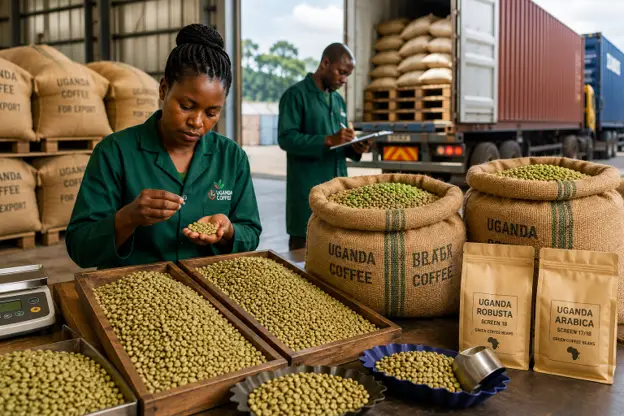
Before anything actually leaves the warehouse, a dependable ugandan robusta coffee beans exporters works with needs to double-check that the coffee, packaging, documents, and destination details all line up with what was ordered. That means going through the commercial invoice, packing list, bag count, shipping marks, certificates, and dispatch schedule — not glancing at them, but actually checking each one against the order. Where possible, request final photographs or a pre-shipment reference sample — a small step that can catch simple mistakes before the consignment leaves the warehouse.
Turn the First Order Into Repeat Supply
A successful purchase becomes far more valuable once the same result can be repeated. Strong direct trade coffee relationships depend on clear records and steady communication.
- Save the approved sample reference
- Record roast results and cup observations
- Note packaging and delivery performance
- Discuss future stock before current supply runs low
- Ask about seasonal changes between crops
- Review a fresh sample before every major reorder
- Keep order communication with one responsible contact
Good records make future decisions faster and help protect consistency over time.
Better Preparation Leads to Better Coffee Purchases
The fastest quote rarely turns out to be the smartest buy. What actually protects a purchase is going through each stage properly — clear specs from the start, samples that can be traced back to their lot, terms written down instead of assumed, and one last check before the shipment leaves. Do that, and importers keep real control over both quality and cost, instead of finding out too late that something didn’t match what was promised. سنتس كوفي works alongside wholesale and export buyers sourcing Ugandan Arabica, offering practical product details, sample coordination, and order planning that holds up end to end.
FAQ’s
1. What is Arabica Coffee AA grade?
Arabica Coffee AA grade generally refers to larger-sized coffee beans that are carefully graded for consistency and are commonly used in premium coffee production.
2. How do I source Arabica Coffee AA grade in bulk?
Start by selecting a reliable supplier, requesting representative samples, verifying quality specifications, and confirming export documentation before placing a wholesale order.
3. Why is sample testing important before buying wholesale coffee?
Sample testing helps evaluate roast performance, flavor profile, bean consistency, and overall quality before committing to a larger shipment.
4. What should I check before choosing a coffee exporter?
Review the supplier’s origin information, processing methods, export experience, quality control, available certifications, and communication throughout the buying process.
5. What documents are required when importing Arabica coffee?
Common export documents include the commercial invoice, packing list, certificate of origin, phytosanitary certificate, and shipping documents, depending on the destination country.