











Walk into almost any neighbourhood café in Rome, Zagreb, or Budapest and order an espresso. Chances are, what lands in front of you contains Robusta coffee — not because the barista compromised, but because the blend was designed that way. Robusta has been holding up European coffee culture quietly and consistently for decades, and most people drinking it every day have no idea.
Cost vs Quality — Not the Same Thing
There is a common assumption that a lower price means lower quality. With Robusta, that equation is more complicated than it first appears.
The bean costs less for straightforward reasons — the plant produces more fruit per hectare, grows at lower altitudes, resists disease better, and is easier to harvest at volume. Those are production advantages, not quality failures. For roasters and café owners managing tight margins, sourcing cheap coffee beans that still perform well in the cup is not cutting corners — it is smart buying.
What Robusta actually brings to a blend is often underappreciated. It carries nearly double the caffeine of Arabica, produces a thicker crema in espresso, and adds a bold, full body that lighter beans cannot match at the same cost. A well-graded lot from a reliable origin does not taste harsh — it tastes exactly like what a strong, honest espresso should.
Market Demand Across Europe
The numbers behind European coffee consumption tell a story that speciality menus do not always reflect:
- Italy and France have blended Robusta into espresso for generations — it is built into the tradition, not added as an afterthought.
- Eastern European markets depend on affordable, consistent coffee for both domestic use and hospitality supply.
- Food service chains and high-volume café operations prioritise reliability and cost control above all else — and this crop delivers both.
- The ready-to-brew and instant categories, which account for a huge share of what Europeans actually drink at home, are built almost entirely on this variety.
- Younger roasters across the continent are beginning to explore high-altitude, carefully processed Robusta lots that sit closer to specialty territory than commodity.
Its Real Role in Instant Coffee
The instant coffee shelf does not get much love from coffee enthusiasts, but it represents one of the largest segments of European consumption by volume. Robusta is the reason that category works as well as it does.
Its higher solids content means better extraction yields during manufacturing, which makes the process more efficient and the end product more affordable for consumers. This is not a recent workaround — it has been the foundation of mass-market coffee production for the better part of a century. The reason it has stayed there is simple: it is consistent, available in large quantities, and does exactly what the category needs it to do.
Supply Chain Insights
For buyers thinking seriously about sourcing, these are the things worth knowing before placing any order:
- Uganda is Africa’s top coffee exporter and one of the world’s leading producers of export-grade Robusta.
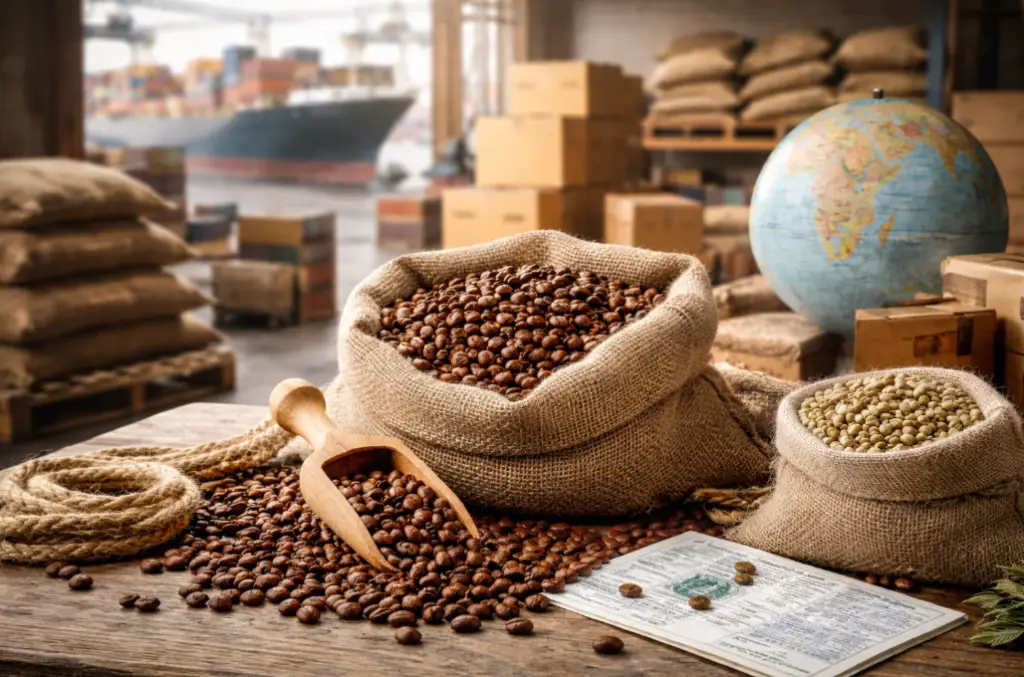
- Robusta coffee beans are typically packed in 60 kg jute bags and graded by screen size, moisture content, and defect count.
- Moisture certification, foreign matter percentage, and broken bean tolerances are the key documents to request before committing to a lot.
- Port of Mombasa in Kenya serves as the main logistics hub for East African exports into European markets.
- Bulk coffee supply arrangements suit Robusta particularly well — the crop is stable year-round and available in consistent volumes from multiple origins.
- Sourcing directly from a certified exporter cuts out broker margins and gives buyers full visibility over grading and origin documentation.
The Bean That Keeps Europe’s Coffee Running
Robusta does not need a rebrand — it needs better sourcing. The gap between a harsh, forgettable lot and one that genuinely improves a blend comes down to origin, processing care, and who is handling the export chain.
Cents Café exports premium, traceable Ugandan Robusta directly to roasters, blenders, and buyers across global markets — with full grading documentation and sample lots available on request.
FAQ
Is Robusta coffee stronger than your regular coffee?
Yes — it has nearly double the caffeine of Arabica and delivers a bolder, fuller cup, which is why it features heavily in espresso blends across Europe.
Why are Robusta coffee beans so much cheaper? Is there a catch?
The plant yields more, grows in easier conditions, and costs less to produce — the price reflects that. The only catch is that poorly sourced lots can taste bitter, so grade and origin still matter.
Are cheap coffee beans like Robusta worth buying?
For blending, high-volume café supply, or instant production, yes. A well-graded lot from a reliable exporter performs far better than its price tag suggests.
Where can you find bulk coffee supply at the best price?
Direct contact with certified exporters in Uganda or Vietnam gives you the best price alongside proper documentation — without the added margin that comes through a broker.
Do Robusta coffee beans make better espresso crema?
They do — the higher solids content produces a thicker, longer-lasting crema, which is exactly why Italian espresso blends have included a Robusta percentage for so long.