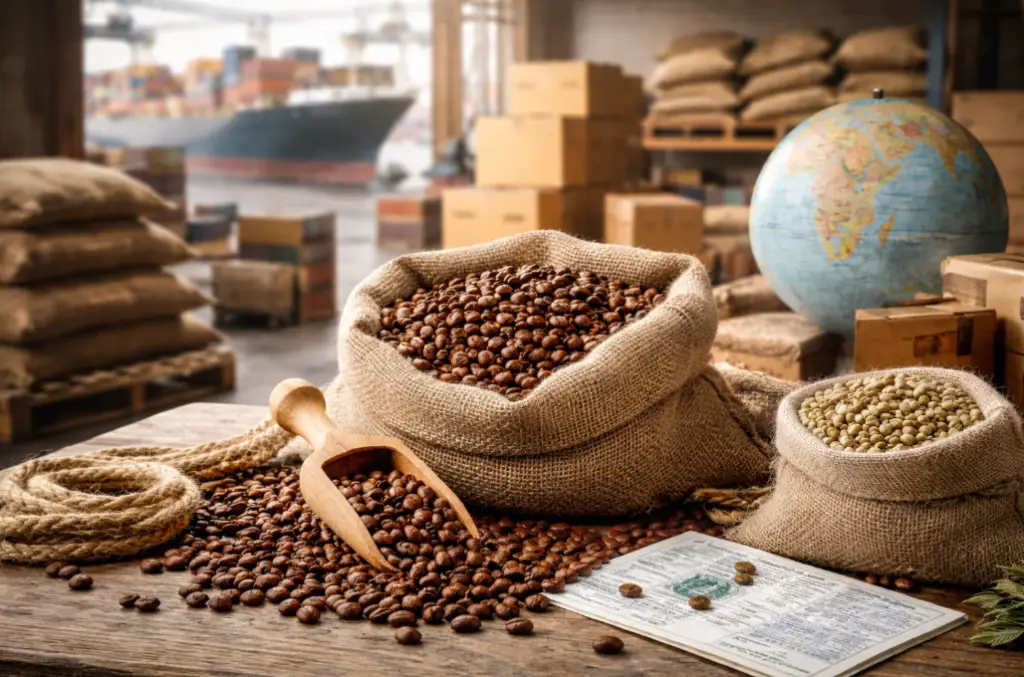
Buying coffee beans used to mean calling a local distributor, waiting weeks for a response, and accepting whatever was available in the warehouse. That process has changed completely. Roasters, café owners, and even serious home brewers across Europe can now buy coffee beans online directly from origin exporters — cutting out layers of middlemen and getting fresher, better-priced beans in the process.
But buying online across borders comes with its own set of questions. Shipping timelines, import duties, VAT rules, and supplier reliability all need to be understood before the first order is placed. This guide walks through all of it clearly.
Online Buying vs Local Sourcing: What Actually Makes Sense
Local sourcing has one obvious advantage — speed. A domestic supplier can deliver quickly, invoices are straightforward, and there are no customs conversations to have. For small, urgent orders that works fine. But for roasters and importers who care about origin, quality control, and cost across larger volumes, local sourcing often falls short.
When buyers source directly from an exporter online, the picture looks different:
- Origin transparency is real. Buyers know exactly which farm or cooperative the beans came from, how they were processed, and when they were harvested.
- Pricing is more direct. Without a local distributor adding margin, the cost per kilogram drops — especially on bulk orders.
- Variety opens up. Local distributors stock what sells fast. Direct exporters offer full range across grades, screen sizes, and processing methods.
- Relationships build over time. Regular direct buyers get consistent quality because the exporter knows their standards and maintains them order after order.
- Freshness improves. Beans that ship directly from origin have not spent months sitting in a third-party European warehouse before reaching the roaster.
- The trade-off is planning. Direct import takes longer than a domestic delivery. But for buyers who plan their stock correctly, that timeline becomes a non-issue.
How Coffee Imports Work in Europe
Europe is one of the largest coffee-importing regions in the world, and the import process is well-established. That does not mean it is without steps — but it is manageable once a buyer understands what is involved.
Green coffee beans enter the EU under a specific customs tariff code. Most green, unroasted coffee enters duty-free under EU trade agreements with producing countries like Uganda, Ethiopia, and Colombia. That is a significant cost advantage that many buyers do not fully realise when they first start importing directly.
Here is how the import process generally works for European buyers:
- The exporter ships the beans from the origin with a commercial invoice, packing list, certificate of origin, and phytosanitary certificate.
- The shipment arrives at a European port — Rotterdam, Hamburg, and Antwerp handle the majority of European coffee imports.
- A customs agent or freight forwarder handles clearance. Most importers work with a broker who manages the paperwork at the port.
- VAT applies at the point of import based on the destination country’s VAT rate. This is reclaimable for registered businesses in most EU countries.
- The beans are released and delivered to the buyer’s warehouse or roastery once clearance is complete.
For buyers new to direct import, working with an experienced freight forwarder on the first shipment removes most of the complexity. The process becomes straightforward after the first order.
Shipping Coffee Beans to Europe: What to Expect
Shipping timeframes and total expenses hinge on where it starts, the shipment size, and the particular shipping method. If you get a grip on the options, it makes it easier to arrange warehouse levels and keep supply from stalling in between.
For most bigger orders, sea freight is the usual choice. A full container or, alternatively, a shared container load from East Africa normally lands in a European port within about three to five weeks. It tends to be a cost-friendly way when the volume is over 500 kilograms, and it is often the preferred approach for established importers.
Air freight moves faster — usually five to ten days from origin to destination — but the cost per kilogram is significantly higher. It suits urgent small orders or sample shipments rather than regular supply runs.
When planning a shipment, buyers should factor in:
- Lead time from the exporter allows for some buffer so the exporter can prepare, bag and also put the right documentation in place before the whole order ships out.
- Port clearance time is usually about three to seven days, depending on the port itself and whether the paperwork is complete enough.
- Inland delivery — from the port to the roastery or the warehouse. This part can take roughly one to three days, just based on the location and how smooth the transfer is.
- Buffer stock — experienced importers keep enough stock on hand to cover the next shipment’s lead time without running short.
Shipping coffee beans across borders is a learnable process. The buyers who manage it well are simply the ones who plan ahead rather than ordering reactively.
Taxes, VAT, and Import Duties: The Simple Version
This is the area that worries most first-time importers — and it is simpler than it looks.
Green, unroasted coffee beans from most African and South American origins enter the EU duty-free. Uganda, for example, benefits from the EU’s Everything But Arms and GSP trade frameworks, which means Ugandan green coffee carries a zero import duty rate into European countries.
VAT is a separate matter. Import VAT applies when the shipment clears customs, but registered businesses reclaim it through their normal VAT return process. So for a café owner or roaster with a VAT number, the import VAT is not a real cost — it is a cash flow timing issue that resolves itself.
The documents needed to clear customs cleanly are:
- Commercial invoice from the exporter
- Packing list with weights and bag counts
- Certificate of origin confirming the beans’ country of origin
- Phytosanitary certificate confirming the beans meet plant health standards
- Bill of lading or airway bill as proof of shipment
A good exporter prepares all of these correctly before the shipment leaves origin. That is one of the clearest signs of a reliable supplier — clean, complete documentation that does not create delays at the port.
Best Sourcing Countries for Green Coffee Beans
Europe imports coffee from dozens of origins, but a handful of countries consistently stand out for quality, reliability, and cost efficiency.
Uganda has grown significantly as a direct-trade origin for European buyers. It produces both Arabica and Robusta at export grade, with strong traceability and a well-developed export infrastructure. For roasters who want a reliable, well-priced origin with genuine flavour character, Ugandan beans offer a strong case. Buyers who want to buy green coffee beans online in bulk will find Uganda particularly well-suited for larger, regular orders.
Ethiopia remains the benchmark for Arabica complexity — floral, fruity, and deeply traceable by region and processing method. Colombia and Brazil dominate commercial Arabica volumes. Vietnam leads global Robusta production in volume, though quality consistency varies significantly by supplier.
For European buyers, the best sourcing country is the one that matches their blend requirements, budget, and volume needs — not simply the one with the most name recognition.
أسئلة متكررة
Where can you buy coffee beans online with fast shipping to Europe?
Direct exporters from Uganda, Ethiopia, and Colombia ship to Europe regularly. Sea freight takes three to five weeks, while air freight delivers within ten days.
How does coffee import work in Europe for online buyers?
The exporter ships with full documentation, and a freight forwarder handles port clearance. Green coffee from most African origins enters the EU duty-free.
Can you buy green coffee beans online for bulk import in Europe?
Yes, a lot of the most direct exporters actually accept bulk orders that ship in jute or grain-pro bags, and it’s pretty normal. Minimum order quantities usually start from 100 to 300 kilograms, sometimes a bit higher.
What are the shipping options for coffee beans to Europe?
Sea freight suits regular bulk orders and takes three to five weeks. Air freight suits urgent shipments and delivers within ten days.
How do you choose the best online coffee bean supplier for Europe?
Try to find the traceable origin, the steady grading, and that clean documentation for every order. A dependable supplier keeps the same quality across repeat shipments too, not only the first one, because it feels more consistent that way, and less murky.