






Hungary and Serbia do not make headlines in the global coffee world—and that is exactly what makes them interesting right now. Speciality café culture is picking up pace in both countries, and the gap between what local consumers want and what local roasters are supplying is still wide open. For someone ready to put in the groundwork, sourcing quality green coffee beans and building a small roasting operation here could be one of the smarter moves in the European coffee space right now.
Market Opportunity
Hungary and Serbia are small markets, but they are moving in the right direction. Specialty coffee is no longer just a capital city trend — it is spreading, and demand is outpacing local supply in many areas.
Hungary
Budapest has a developed specialty scene with a growing number of independent cafés and coffee-educated consumers. Outside the capital — in cities like Debrecen, Győr, and Pécs — the market is less crowded and still developing, which leaves real room for a regional roaster to build a loyal following.
Serbia
In Serbia, café culture runs deep. What is changing is the type of coffee people want. Younger consumers in Belgrade, Novi Sad, and Niš are moving toward filter and single-origin options, and local supply is not keeping up with that shift. Startup costs are also generally lower here than in most EU markets, which helps early-stage operations manage their cash carefully.
Hungary vs. Serbia—A Quick Comparison
| Factor | Hungary | Serbia |
| EU membership | Yes | No |
| Specialty coffee demand | Growing steadily | Rising fast in cities |
| Startup costs | Moderate | Lower |
| Import regulations | EU standard | Improving |
| Cross-border trade | Easy within EU | More steps required |
| Best entry point | Wholesale to cafes | Direct-to-consumer |
Both markets have genuine potential. The right choice depends on where you are based and which sales channel you want to build first.
Required Setup
Getting started does not require a large budget, but it does require the right foundations in the right order. This is where most first-time roasters go wrong — investing in machinery before confirming there are actual customers waiting.
A solid coffee startup guide will always prioritise sales validation before production investment. Here is what the setup phase looks like in practice:
- Register the business with the relevant authority—the National Tax and Customs Administration in Hungary or the Business Registers Agency in Serbia.
- Choose a production space of 30 to 50 square meters with proper ventilation and food handling compliance.
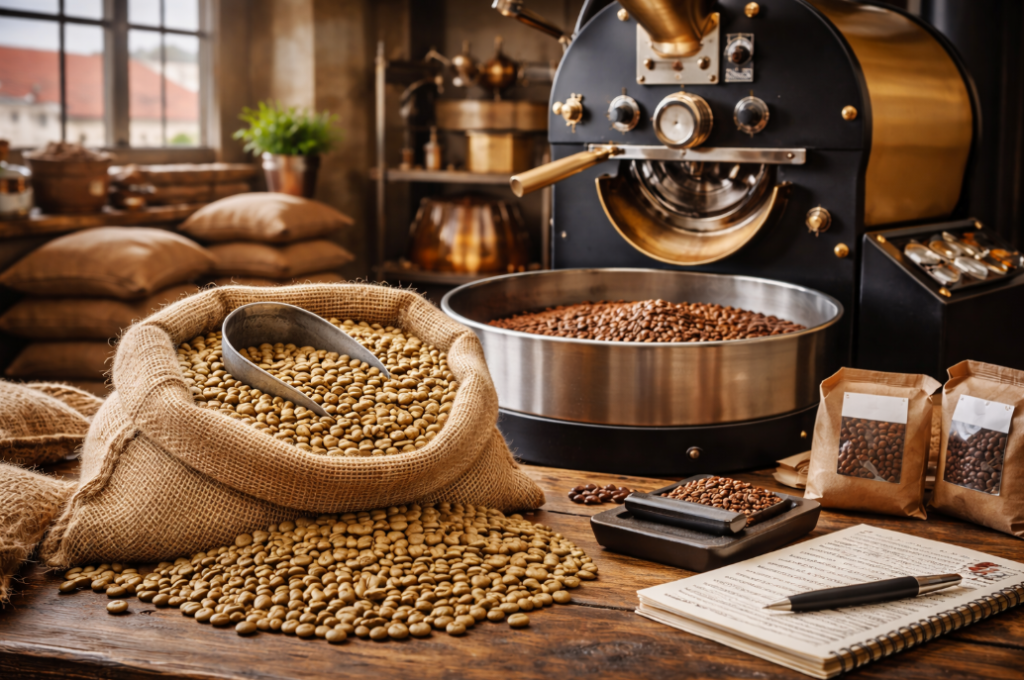
- Buy small-batch coffee roasting equipment—a 1 kg to 3 kg drum roaster is the standard starting point.
- Source sample green coffee beans from a certified exporter before placing any large orders.
- Test roast profiles across multiple lots until you have two or three you can sell confidently.
- Approach cafés with samples and confirm wholesale interest before scaling production.
- Launch online sales through a simple storefront to build direct-to-consumer revenue alongside wholesale.
Bean Sourcing Strategy
Where your beans come from shapes your flavour, your story, and your reputation with buyers. Traceable, well-documented supply gives you something real to put on your packaging — and something genuine to say when a café owner asks where your coffee comes from.
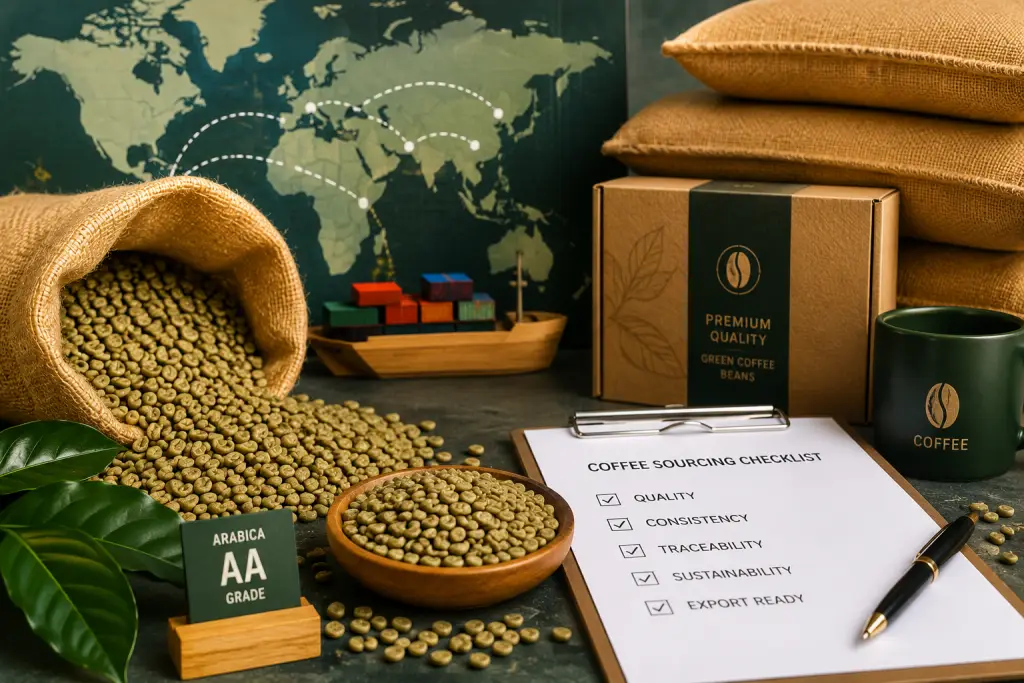
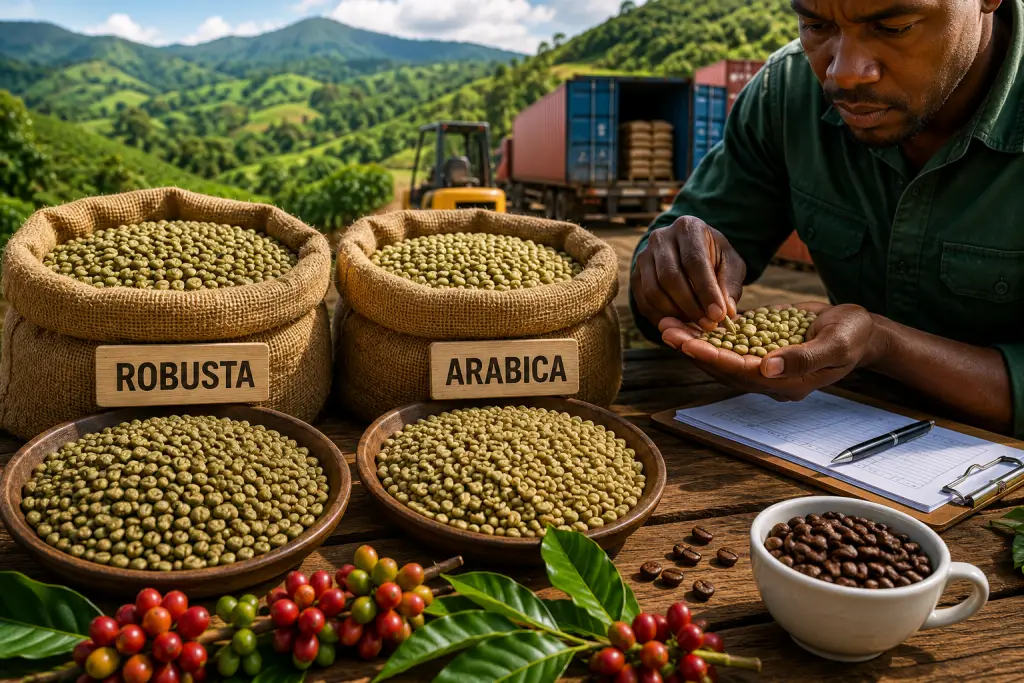
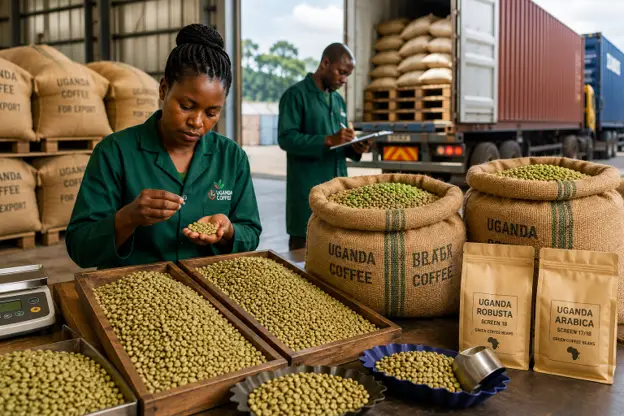
Uganda is one of the strongest sourcing origins available to European roasters right now. It is Africa’s leading coffee exporter, producing both high-altitude Arabica and distinctive Robusta grades with complex, layered cup profiles. When evaluating sourcing partners, look for suppliers who provide moisture content data, screen size documentation, and farm-level traceability. These details separate export-grade supply from commodity lots that roast unevenly and damage your consistency.
Roasting equipment and bean origin work together—even the best drum roaster cannot fix an inconsistent green lot.
Profit Model
The margin structure in coffee roasting rewards smart selling, not just good roasting.
- Direct-to-consumer online—Highest margin per bag, slower to build volume.
- Wholesale to independent cafés—Lower per-kilogram rate, but steady repeat orders.
- Subscription model — Predictable monthly revenue that supports cash flow planning.
- Private label for café groups — High volume once the relationship is established.
Export-grade green lots vary in price depending on origin, grade, and order size—it is worth getting quotes from multiple exporters before committing. A finished 250g bag of speciality coffee can retail at a meaningful premium in both markets when the origin story and roast quality back it up. Small roasteries running three to four days per week typically need 12 to 18 months to reach break-even, though this depends heavily on how quickly wholesale accounts are secured.
Choosing the best coffee roaster equipment within your actual budget matters as much as the beans. Reliable heat control and repeatable batch data will define your cup quality more than any brand name on the side of the machine.
Start With the Right Beans
Hungary and Serbia offer a real opening for motivated coffee entrepreneurs. The demand is there; the local roasting supply is still catching up, and both markets have customers willing to pay for quality they can trust. What separates a roastery that builds a following from one that struggles is almost always the same thing—the consistency and traceability of the beans sitting at the center of the operation.
Cents Coffee exports premium, traceable Ugandan green coffee beans directly to roasters and buyers across global markets. Whether you are placing your first sample order or looking to establish a reliable long-term supply, full grading documentation and export specifications are available on request.
Preguntas Frecuentes
How Do You Start a Coffee Roasting Business with Green Coffee Beans?
Get your green coffee beans from a trusted exporter, find a small space, and take samples to local cafés before you do anything else.
What Equipment Do You Need for a Successful Coffee Roasting Business?
A drum roaster, precision scale, commercial grinder, cupping tools, and packaging with degassing valves cover everything you need to get your first batches out the door.
Are Green Coffee Beans Better for Starting a Coffee Roasting Business?
Yes — unroasted stock stays fresh for up to 15 months and gives you full control over your roast profile, which directly shapes your product quality.
Can You Start a Coffee Roasting Business from Home?
Small home machines like the Behmor are fine for practice, but once you are selling commercially, a proper space is not optional—food safety rules in both countries require it.
Where Can You Buy Green Coffee Beans and Roasting Equipment Online?
Algrano and Coffeehunt are good starting points for beans. For machines, check European distributors or second-hand listings — you can find solid equipment at a fraction of the new price.